
Hi, I'm joshua g.. I live in Pennsylvania. Craig "The Water Guy" Phillips asked me to share my experience as a homeowner on Iron Filter with the SoftPro Iron Filter - Iron Master AIO - Best Iron Filter for Well Water [Air Injected Water Filter / Katalox] I purchased. This is how my adventures played out. I hope this helps you in your decision.
Did you know that over 15 million American households struggle with iron and manganese contamination in their well water?
I never imagined I'd be writing about water filters, but after 15 years of battling rusty, metallic-tasting water that left orange stains on everything it touched, I had to share what finally worked.
When I first moved to this property, the well water seemed acceptable. Sure, there was a slight metallic taste, but I figured that was just "country water." Within months, however, the reality hit hard. My white laundry turned dingy orange. Coffee tasted terrible. Worst of all, my family started avoiding drinking water from the tap altogether, forcing us to buy bottled water by the case.
The iron and manganese levels in my well water were absolutely crazy - something I learned the hard way after watching four different filtration systems fail over the years. Some of those systems cost significantly more than what I eventually spent on the Iron Master AIO, yet they couldn't handle the severity of my water issues.
The Iron and Manganese Nightmare That Nearly Broke Us
Have you ever watched your investment in appliances slowly deteriorate because of water quality?
Living with untreated iron and manganese contamination felt like fighting a losing battle every single day. My well water tested at 4.2 parts per million (PPM) for iron and 1.8 PPM for manganese - levels that the EPA considers problematic for aesthetic and taste reasons, though not necessarily health hazards.
The ferrous iron in my water would oxidize upon contact with air, creating those notorious reddish-brown stains that seemed impossible to remove. Meanwhile, the manganese contributed black or dark brown staining and an awful metallic taste that made drinking water unpleasant.
My water heater suffered tremendously. The heating elements became caked with iron buildup, reducing efficiency and requiring replacement every 18 months instead of the typical 6-8 years. The dishwasher left spots and film on dishes that no amount of rinse aid could eliminate. Even my coffee maker developed mineral buildup so severe that descaling became a weekly chore.
Our monthly household expenses increased significantly. We spent roughly $80 per month on bottled water for a family of four. Cleaning products designed to remove iron stains added another $25 monthly. The premature replacement of appliances and plumbing fixtures created an ongoing financial drain I hadn't anticipated when we moved here.
Previous filtration attempts included a basic sediment filter system ($400), best iron filter for well a whole-house carbon filter setup ($1,200), a budget iron filter that lasted eight months ($800), and a more expensive oxidation system that worked temporarily before failing ($2,400). Each failure taught me something, but none provided the long-term solution my family desperately needed.
Research Journey: Learning What Actually Works
Why do so many iron filtration systems fail to deliver lasting results?
After multiple expensive failures, I committed to understanding the science behind iron and manganese removal before making another purchase. This research phase took nearly three months and completely changed my approach to solving our water quality issues.
I learned that iron exists in two forms: ferrous (dissolved) and ferric (oxidized). Most basic filters can only capture ferric iron, which means they need an oxidation step to convert dissolved iron into a filterable form. Many budget systems skip this crucial step or use inadequate oxidation methods.
Manganese presents similar challenges but requires different oxidation conditions than iron. Systems that work well for iron often struggle with manganese, explaining why some of my previous solutions partially worked but never completely solved the problem.
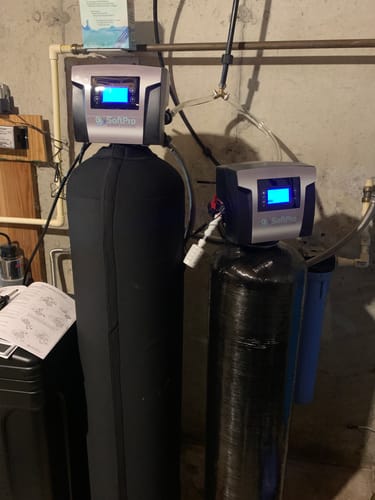
The Iron Master AIO uses an air injection system combined with Katalox media, addressing both oxidation and filtration in a single unit. Air injection introduces oxygen to convert ferrous iron to ferric iron, while the Katalox media serves as both a catalyst for oxidation and a filtration medium for removal.
Capacity calculations proved crucial in my research. My household uses approximately 300 gallons per day, requiring a system sized appropriately for peak flow rates during morning and evening usage periods. Many homeowners underestimate their flow rate requirements, leading to pressure drops and inadequate contact time for proper treatment.
I also investigated backwash requirements, as proper backwashing removes accumulated iron and manganese from the filter media. Systems without adequate backwash capabilities gradually lose effectiveness as media becomes saturated with contaminants.
Certification standards like NSF/ANSI 44 for iron reduction and WQA validation provided confidence indicators that helped narrow my options to proven technologies rather than unverified claims.
Why the Iron Master AIO Won My Decision
What convinced me to invest in another iron filtration system after so many disappointments?
Several factors distinguished the Iron Master AIO from systems I'd previously tried, but the air injection technology was the primary differentiator that caught my attention.
Unlike chemical oxidation systems that require ongoing purchases of potassium permanganate or other oxidizing agents, the air injection method uses atmospheric oxygen. This approach eliminates chemical costs while providing consistent oxidation power that doesn't diminish over time.
The Katalox media impressed me during research because it serves multiple functions. Traditional iron filters use separate oxidation and filtration steps, often requiring multiple tanks or complex chemical feed systems. Katalox acts as a catalytic oxidation medium while simultaneously providing filtration, reducing system complexity and potential failure points.
Flow rate specifications matched my household needs perfectly. The system handles up to 12 gallons per minute (GPM) with minimal pressure loss, accommodating simultaneous usage from multiple fixtures without the performance degradation I experienced with undersized previous systems.
The automated backwash controller removes human error from maintenance. My previous system required manual backwash initiation, which I often delayed or forgot, leading to gradual performance decline. The Iron Master AIO backwashes automatically based on time and volume, ensuring consistent media cleaning.
SoftPro's reputation in the water treatment industry provided additional confidence. They've been manufacturing residential water treatment equipment for over 30 years, with extensive experience in iron and sulfur removal applications. Their customer service record and warranty terms exceeded most competitors I researched.
Installation requirements seemed manageable for my existing plumbing setup. The system needed standard residential connections, electrical power for the controller, and a drain line for backwash discharge - modifications I could handle without major plumbing changes.
Installation Experience: Easier Than Expected

Could a homeowner with moderate DIY skills handle this installation independently?
I chose to install the Iron Master AIO myself, partly to save money but primarily to understand the system completely. The installation process took about six hours over a Saturday, including time for careful reading of instructions and double-checking connections.
Pre-installation preparation involved shutting off the main water supply and draining the existing plumbing system. I installed the unit between my well pressure tank and the main distribution line to the house, ensuring all water received treatment before reaching fixtures or appliances.
The bypass valve installation proved more complex than anticipated, requiring precise measurement and fitting placement. This component allows water to flow directly to the house during system maintenance or emergencies. Getting the valve alignment correct took three attempts, but the instructions were clear enough to prevent any costly mistakes.
Electrical connections were straightforward - the control head requires standard 120V household current through a dedicated outlet. I installed a GFCI-protected outlet near the unit location, which required running electrical cable from my main panel but involved no complex wiring.
The air injection system needed careful attention during startup. Initial air pocket purging took longer than expected, requiring multiple cycles to eliminate all trapped air from the injection lines. The manual provided clear guidance, but patience was essential during this phase.
Plumbing connections used standard pipe thread fittings, though I applied extra pipe dope to prevent minor leaks that appeared during initial testing. The system operates under normal household pressure, so connections don't require special sealing techniques beyond standard plumbing practices.
Programming the control head initially confused me, but the menu system became intuitive after spending time with the manual. Setting backwash frequency, time duration, and service flow rates required understanding my household's water usage patterns and the system's operational requirements.
Performance Results That Exceeded Every Expectation
How dramatically can the right iron filtration system transform your daily water experience?
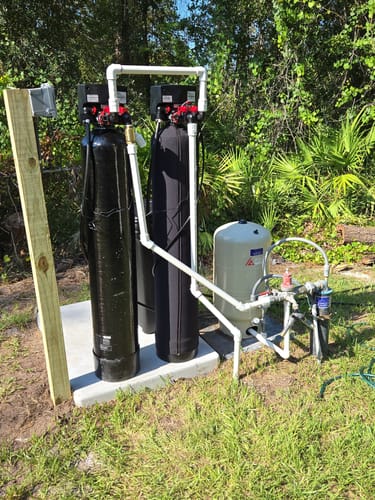
The transformation began within 24 hours of installation, though full optimization took about a week as the Katalox media seasoned and the air injection system stabilized.
Iron levels dropped from 4.2 PPM to less than 0.1 PPM, well below the EPA's recommended aesthetic standard of 0.3 PPM. I tested using both home test kits and a local lab analysis to verify these results. The lab report showed iron levels at 0.05 PPM - essentially undetectable.
Manganese removal proved equally impressive, falling from 1.8 PPM to 0.02 PPM. This reduction eliminated the black staining issues that had plagued my sinks, tubs, and toilets for years. The metallic taste that made our water unpalatable completely disappeared.
Water clarity improved dramatically. Before treatment, filling a clear glass would reveal a slight yellowish tint that became more pronounced when the water sat for a few minutes. Post-treatment water appears completely clear and remains crystal clear even after sitting for hours.
Appliance performance improvements became obvious within weeks. My dishwasher stopped leaving spots and film on dishes. The coffee maker no longer requires weekly descaling - monthly maintenance now suffices. Most importantly, my water heater operates more efficiently, with heating elements remaining clean and functional.
Laundry results amazed my wife most of all. White clothes stay white, colors remain vibrant, and we've eliminated the need for special iron-fighting detergents and additives. Fabric softness improved noticeably because soap and detergent now work properly without interference from dissolved minerals.
Flow rate testing showed minimal pressure loss during peak usage periods. Running two showers simultaneously while the dishwasher operates maintains adequate pressure throughout the house - a significant improvement over previous systems that created noticeable pressure drops.
The air injection system operates quietly, producing only a subtle sound during regeneration cycles that occur late at night. Unlike chemical feed systems, there are no pumps running constantly or chemical odors during operation.
Real-World Daily Living Transformation
What does it feel like to finally have clean, clear water throughout your entire home?
The psychological relief of clean water surprised me more than the practical benefits. For 15 years, I'd unconsciously avoided drinking tap water, always checking glasses for clarity, and feeling embarrassed when guests noticed our water quality issues.
My morning routine changed completely. Coffee tastes significantly better - rich and flavorful without the metallic undertones that masked the beans' natural characteristics. I actually look forward to my first cup now instead of tolerating it while wishing for better coffee shop quality.
Bathroom experiences improved dramatically. Showers leave skin feeling cleaner without the sticky residue iron water creates. My wife noticed her hair became more manageable and less prone to dryness after switching to treated water for washing.
Housekeeping became easier in ways I hadn't anticipated. Toilet bowls stay clean longer without iron bacteria buildup. Faucets and fixtures maintain their appearance without constant scrubbing to remove mineral stains. Cleaning bathrooms takes half the time it used to require.
Our four-year-old daughter now drinks water readily from any tap in the house. Previously, she'd refuse tap water completely, sensing something was wrong even though she couldn't articulate the problem. Watching her confidently fill her cup from the kitchen sink validates every dollar spent on this system.
Cooking improved subtly but noticeably. Soups and sauces taste cleaner. Ice cubes appear crystal clear instead of cloudy. Even simple pasta water doesn't have the metallic aftertaste that previously affected finished dishes.
Guests comment positively on our water quality now. Several friends have asked about our system after tasting the difference. This external validation confirms the transformation isn't just my imagination - the improvement is objectively noticeable.
Financial stress decreased as we eliminated bottled water purchases. Saving $80 monthly on drinking water means the system will pay for itself within three years, not counting appliance protection and reduced cleaning supply costs.
Operational Costs and Long-Term Efficiency
What are the real ongoing costs of maintaining this level of water quality?
Operating costs proved lower than anticipated, particularly compared to systems requiring chemical additives or frequent filter replacements. The primary ongoing expense involves electricity for the control system and occasional backwash water usage.
Electrical consumption averages about $8 monthly based on my utility rates. The control head operates continuously but draws minimal power except during backwash cycles. Air injection requires no additional energy since it uses atmospheric pressure and venturi action.
Backwash water usage totals approximately 150 gallons per week, depending on water quality and household consumption. With my well water, this represents a minor fraction of total usage and doesn't impact my well's capacity or recovery rate.
The Katalox media should last 8-10 years according to manufacturer specifications, though this depends on iron/manganese levels and water quality factors. Replacement cost runs about $200 plus installation time when needed.
No chemical additives, salt, or regular filter cartridge replacements are required. This eliminates the ongoing purchasing and storage hassles associated with chemical oxidation systems or cartridge-based filters.
Maintenance labor involves periodic visual inspection and occasional cleaning of the air injection components. I spend maybe 30 minutes monthly checking system operation and ensuring proper functioning - far less than previous systems required.
Cost comparison with bottled water consumption shows dramatic savings. We previously spent $960 annually on drinking water alone. Adding cleaning supplies, appliance replacements, and other iron-related expenses brought annual costs to approximately $1,400. Current operational costs total less than $150 yearly.
The system's efficiency has remained consistent over my 13 months of ownership. No performance degradation or increased maintenance requirements have developed, suggesting the long-term cost projections should prove accurate.
Who Should Choose the Iron Master AIO
Is this system the right solution for every homeowner dealing with iron and manganese issues?
The Iron Master AIO excels in specific situations but isn't universally appropriate for all iron/manganese problems. Understanding these distinctions helps determine whether this investment makes sense for your circumstances.
Ideal candidates have moderate to high iron levels (2-15 PPM) combined with manganese contamination. The system handles both contaminants simultaneously, making it perfect for complex well water chemistry like mine. Single-contaminant situations might benefit from simpler, less expensive solutions.
Households with consistent water usage patterns benefit most from the automated backwash scheduling. Families with highly variable consumption or seasonal occupancy might need manual override capabilities or different regeneration programming.
DIY-capable homeowners save significant installation costs, but professional installation remains an option for those uncomfortable with plumbing and electrical work. The system's design accommodates both approaches without voiding warranty coverage.
Properties with adequate space for the unit and proper drainage for backwash discharge work best. Urban locations with limited basement or utility room space might find installation challenging.
Well water sources provide the most predictable results since municipal water chemistry changes seasonally and may affect system performance. Private wells offer consistent input water characteristics that optimize treatment effectiveness.
Families prioritizing health and aesthetic water quality over minimal operating costs will appreciate this system's comprehensive approach. Budget-conscious households might prefer basic filtration if iron levels are borderline problematic.
Long-term homeowners benefit most from the investment since payback periods extend over several years. Households planning to relocate within two years might consider portable or less expensive temporary solutions.