
Hi, I'm Larry T.. I live in Idaho. Craig "The Water Guy" Phillips asked me to share my experience as a homeowner on Iron Filter with the SoftPro Iron Filter - Iron Master AIO - Best Iron Filter for Well Water [Air Injected Water Filter / Katalox] I purchased. This is how my adventures played out. I hope this helps you in your decision.
Why I Desperately Needed an Iron Filter Solution
Living in rural Idaho with well water sounds idyllic until you're dealing with orange stains on everything white in your house. My story starts about eight months ago when I finally reached my breaking point with our iron-contaminated well water.
Did you know that iron concentrations as low as 0.3 parts per million can cause noticeable staining and taste issues?
My well water tested at 4.2 PPM of iron – over fourteen times the recommended level. Every toilet bowl, sink, and bathtub in our home had those telltale rusty orange rings that no amount of scrubbing could eliminate.
The problem wasn't just cosmetic. Our white laundry came out of the washing machine looking like it had been dyed with rust. My wife's favorite white blouses were permanently stained after just a few washes. The metallic taste in our drinking water was so strong that we'd been buying bottled water for months, which was getting expensive.
But what really pushed me over the edge was when our dishwasher started leaving orange spots on our glassware. Even our morning coffee tasted like pennies. I knew I had to find a solution that would tackle the root cause, not just mask the symptoms.
My Research Journey: Understanding Iron Filtration Technology
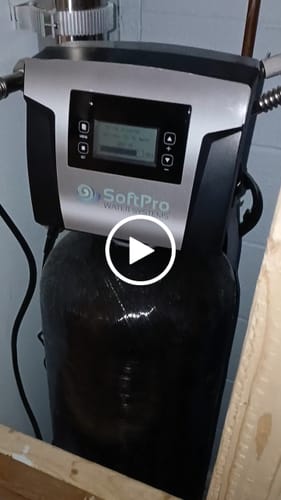
Before diving into any purchase, I spent weeks researching iron filtration systems. I'm the type of person who reads every review, compares specifications, and tries to understand the science behind the solution.
I learned that iron exists in well water in two primary forms: ferrous iron (dissolved and clear) and ferric iron (oxidized and visible as particles). Most traditional filters only capture ferric iron, which meant they'd miss a significant portion of my contamination.
The Iron Master AIO uses what's called air injection oxidation combined with Katalox Light media. Here's how I understood it to work: the system injects air into the water, converting dissolved ferrous iron into ferric iron particles. Then, the Katalox Light media – which is essentially a catalytic filtration medium – captures these oxidized particles.
What impressed me during my research was that this wasn't just an iron filter. The system also addressed hydrogen sulfide (that rotten egg smell) and manganese. While we didn't have sulfur issues, I appreciated the comprehensive approach since well water problems often involve multiple contaminants.
The sizing calculations were crucial. With a household of four and peak flow demands during morning routines, I needed a system that could handle 7-10 gallons per minute without creating pressure drops. The Iron Master's flow rate specifications aligned perfectly with our needs.
Unboxing and First Impressions
When the Iron Master arrived, I was immediately struck by the build quality. The control head felt substantial – not like the lightweight plastic I'd seen on some competitor models. The mineral tank was a proper fiberglass construction that felt like it would last decades.
Everything was well-packaged with foam protection, and nothing was damaged during shipping. The documentation package was comprehensive, including installation guides, warranty information, and a water testing log sheet that I found particularly useful.
The Katalox Light media came pre-loaded, which saved me the messy job of loading filter media myself. I'd heard horror stories from neighbors about dumping bags of media and creating clouds of dust in their basements.
One thing that surprised me was the compact footprint. Based on the specifications, I'd expected something larger, but it fit comfortably in our utility room with space for maintenance access.
Installation Experience and Initial Setup

I'll be honest – I considered hiring a plumber for the installation, but the comprehensive instructions convinced me to tackle it myself. I'm reasonably handy, and the system came with all necessary fittings and adapters.
The most challenging part was installing the bypass valve system. This allows you to route water around the filter for maintenance or emergencies. While not technically difficult, it required careful planning to ensure I could access everything later.
The air injection system required a standard electrical connection, which I ran to a nearby outlet. The control head programming was surprisingly intuitive – much easier than programming my sprinkler system timer.
Initial startup involves a series of backwash cycles to settle the media and remove any shipping dust. This took about an hour, during which I couldn't use water in the house. I'd recommend planning this for a time when nobody needs showers or laundry.
The first water that came out was slightly cloudy, which the instructions warned about. After running faucets for a few minutes, the water cleared up completely.
Performance Testing and Real-World Results
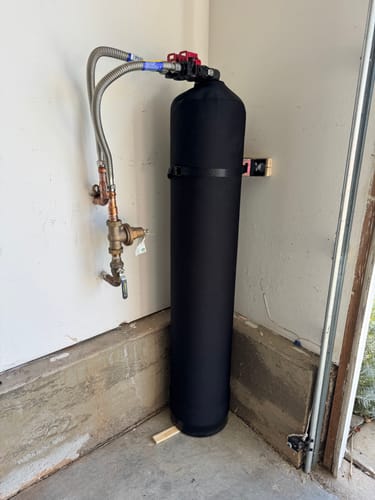
The transformation was dramatic and immediate. Within 24 hours, I could taste the difference in our water. That metallic, penny-like flavor was completely gone. My morning coffee Iron removal system from SoftPro actually tasted like coffee again, not like I'd dropped coins in it.
I tested the water using iron test strips before and after installation. Pre-filter readings consistently showed 4.2 PPM iron. Post-filter testing showed iron levels below 0.1 PPM – well within acceptable limits for household use.
But the real proof was in the laundry and cleaning.
New stains stopped appearing immediately. Our white towels and shirts came out of the washing machine actually white. The orange rings in our toilets stopped forming, and existing stains gradually faded as we cleaned them.
I also noticed our soap and shampoo seemed to work better. Iron in water interferes with soap effectiveness, so removing it meant we needed less detergent and got better cleaning results.
The system's regeneration cycle runs automatically every few days, typically during low-usage periods like 2 AM. I barely notice it running – just a gentle whooshing sound that lasts about 30 minutes.
Daily Life Improvements and Unexpected Benefits
Eight months later, the improvements to our daily life continue to surprise me. My wife's blonde hair no longer has that brassy tint that iron water can cause. Our guests have commented on how much better our water tastes compared SoftPro well water iron system to their rural wells.
The dishwasher performance improvement was unexpected but significant. Our glassware and dishes come out spot-free, and we've stopped using rinse aid completely. The iron stains that were building up inside the dishwasher have gradually disappeared.
Our water heater is running more efficiently too. Iron buildup was creating sediment that reduced heating efficiency. Our energy bills haven't dropped dramatically, but I've noticed the water heater cycles less frequently.
Even our ice maker works better now.
The cubes are crystal clear instead of cloudy, and they don't have that metallic taste that made our drinks unpalatable.
Gardening has improved as well. Iron-heavy water was causing chlorosis in some of our plants – yellowing leaves due to iron interference with nutrient uptake. Our vegetable garden is noticeably healthier this season.
Maintenance Reality and Operating Costs
Maintaining the Iron Master has been refreshingly straightforward. The system is largely self-maintaining through its automatic backwash cycles, but there are a few things I monitor regularly.
Every month, I check the air injection system to ensure it's drawing air properly. This takes about two minutes and involves listening for the slight sucking sound at the air intake.
The Katalox Light media is rated for 5-7 years of service life, depending on iron levels and water usage. At my contamination levels, I expect to replace it around the five-year mark, which costs approximately $200-250.
Electricity usage is minimal – the control head draws about the same power as a digital clock. Water usage during regeneration cycles is reasonable, typically 50-80 gallons every 3-4 days, depending on our household usage patterns.
I keep a water testing log, checking iron levels monthly with test strips. Consistent readings below 0.1 PPM confirm the system is performing as expected. If levels started rising, it would indicate media replacement time.
The only surprise maintenance item was cleaning the air intake filter every six months. It's a simple foam filter that catches dust and debris, but forgetting to clean it reduces system efficiency.
Honest Assessment: What Works and What Doesn't
After eight months of daily use, I can provide an honest assessment of the Iron Master's strengths and limitations.
What exceeds expectations: The iron removal performance has been flawless. Water taste improvement was immediate and lasting. Build quality feels commercial-grade. The automatic operation means I rarely think about it.
Minor frustrations: The regeneration cycle, while quiet, does create a slight pressure drop if someone showers during backwash. The control head display could be brighter – it's hard to read in dim basement lighting.
The system takes up more space than I initially calculated when you account for maintenance clearances. Make sure you have at least three feet of clearance on the control head side for servicing.
Would I buy it again?
Absolutely. The Iron Master solved our iron problem completely and has been reliable throughout our ownership. The water quality improvement has enhanced our daily life in ways I didn't anticipate.
For households dealing with iron concentrations between 2-15 PPM, this system delivers professional-grade results. The air injection technology handles both ferrous and ferric iron effectively, and the Katalox Light media provides excellent filtration capacity.
If you're on the fence about addressing iron problems in your well water, I can tell you that the difference is dramatic. Clean, clear, great-tasting water isn't a luxury – it's what we should expect from our homes.