
Hi, I'm Fred S.. I live in Minnesota.
Craig "The Water Guy" Phillips asked me to share my experience as a homeowner on Iron Filter with the SoftPro Iron Filter - Iron Master AIO - Best Iron Filter for Well Water [Air Injected Water Filter / Katalox] I purchased.
This is how my adventures played out. I hope this helps you in your decision.
Did you know that nearly 75% of private wells in Minnesota contain iron levels that exceed EPA recommendations?
I discovered this the hard way when my family moved to our rural property three years ago. What started as excitement about well water independence quickly turned into frustration as orange stains appeared on everything from our white laundry to the bathroom fixtures.
The Iron Problem That Changed Everything
Living with well water in Minnesota, I thought the occasional rusty taste was just part of country life. Boy, was I wrong.
It started subtly. My wife noticed that our white towels were developing a yellowish tint after just a few washes. I dismissed it as normal wear until the staining became undeniable. Within six months, our toilet bowls had orange rings that no amount of scrubbing could remove, and our dishwasher left spots on glassware that made entertaining embarrassing.
The breaking point came during a dinner party when a guest politely asked if something was wrong with our water after tasting it straight from the tap. The metallic, bitter flavor I'd grown accustomed to was apparently quite noticeable to fresh palates.
I tested our well water and discovered we had 4.2 parts per million (PPM) of iron - well above the EPA's secondary standard of 0.3 PPM. This explained everything: the staining, the taste, and why our appliances seemed to be aging prematurely. Our water heater, barely two years old, already showed signs of sediment buildup that typically takes five years to develop.
The iron in our well water was primarily ferrous iron - the dissolved, clear form that becomes visible ferric iron when exposed to oxygen. This oxidation process was happening throughout our plumbing system, creating the rusty deposits that were slowly damaging our fixtures and appliances.
My Search for the Right Iron Removal Solution
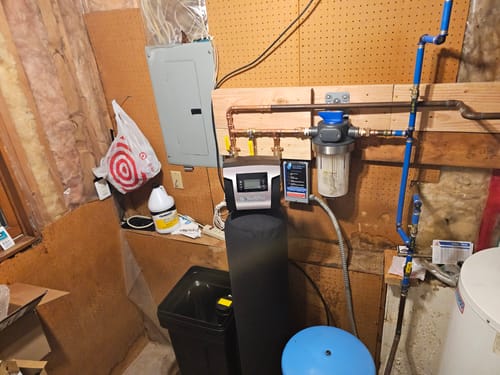
Determined to solve this problem permanently, I dove deep into research on iron removal systems for well water. The learning curve was steeper than I expected.
Initially, I considered basic sediment filters, thinking iron was just another particle to strain out. I quickly learned that dissolved ferrous iron passes right through standard filters until it oxidizes into larger ferric particles. This meant I needed a system that could handle both best filter for iron in well water forms of iron effectively.
I researched three main technologies: salt-based water softeners, oxidizing filters, and air injection systems. Salt-based softeners could handle some ferrous iron but struggled with higher concentrations and couldn't address ferric iron or iron bacteria. Traditional oxidizing filters required chemical additives and frequent media replacement.
Air injection systems caught my attention because they use natural oxidation - injecting air into the water stream to convert dissolved ferrous iron into ferric iron, which can then be filtered out mechanically. This approach seemed more environmentally friendly and potentially more reliable long-term.
The SoftPro Iron Master stood out during my research for several reasons. The Katalox media promised superior iron removal capacity compared to traditional greensand or birm media. The air injection system was fully automatic, requiring no chemical additives. Most importantly, the system was designed to handle iron concentrations up to 30 PPM - far exceeding what I needed but providing confidence in its capability.
What clinched my decision was the comprehensive approach: the system included a retention tank for proper contact time, automatic backwashing for self-cleaning, and the proven Katalox media that could handle iron, manganese, and hydrogen sulfide simultaneously.
Unboxing and First Impressions of the Iron Master
The Iron Master arrived in two packages - the main filter tank and a separate box containing the control valve and accessories. I was immediately impressed by the professional packaging and the weight of the components.
The main filter tank measured 10 inches in diameter and stood 54 inches tall - larger than I expected but still manageable in our utility room. The fiberglass construction felt substantial, with a smooth finish that suggested it would hold up well in our humid basement environment.
The control valve was clearly the heart of the system. The digital display and programming buttons looked intuitive, though I appreciated that the manual provided detailed setup instructions. The valve body was constructed from heavy-duty materials with brass fittings that spoke to long-term reliability.
Inside the box, I found all necessary connections, including the air injection line, drain tubing, and bypass valve components. The inclusion of Teflon tape, pipe dope, and detailed installation diagrams showed attention to detail that gave me confidence in the manufacturer's support.
The 1.5 cubic feet of Katalox media came pre-loaded in the tank, which saved considerable installation time. This media looked different from traditional filter media I'd seen - darker and more uniform in size, with a slight sheen that indicated its catalytic properties.
Installation Experience and Initial Setup

I chose to install the Iron Master myself, having some plumbing experience and wanting to understand the system completely. The process took most of a Saturday but was straightforward with the provided instructions.
The first step involved selecting the optimal location. The system needed access to the main water line before any splits, adequate clearance for the tank and valve, and proximity to a drain for backwash water. I positioned it between our pressure tank and the main distribution line, about three feet from our utility sink.
Cutting into the main water line was the most nerve-wracking part, but the installation went smoothly. The bypass valve installation iron filtration for well water was particularly well-designed - it allowed me to test connections and maintain water service during setup. I appreciated being able to turn the water back on for my family while I completed the electrical connections.
The air injection line required the most attention during installation. This line draws air into the retention tank where iron oxidation occurs. Proper positioning was critical - too low and it wouldn't draw adequate air, too high and the system wouldn't function efficiently. The instructions provided specific measurements that made this foolproof.
Programming the control valve took about 30 minutes. The system needed to know our water hardness, iron levels, and daily water usage to calculate optimal backwash frequency. I entered our 4.2 PPM iron level and estimated our family's 200-gallon daily usage. The valve automatically calculated that backwashing every three days would provide optimal performance.
The initial startup sequence was impressive to watch. The system automatically filled, drew air, and began the oxidation process. Within an hour, I could see rust-colored water flowing to the drain as the first iron was captured and flushed out.
Real-World Performance and Water Quality Results
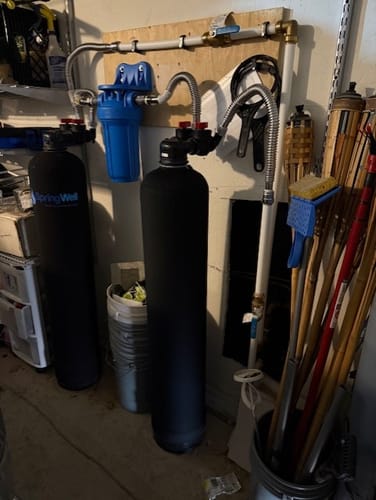
The transformation in our water quality was remarkable, though not immediate. I tested the water daily during the first week to track the system's break-in period and performance optimization.
Day one results showed iron levels dropped from 4.2 PPM to 1.8 PPM - significant improvement but not yet at the target level. By day three, levels had decreased to 0.7 PPM, and by the end of the first week, our water consistently tested at 0.1 PPM iron - well below the 0.3 PPM EPA recommendation.
The taste improvement was the first thing our family noticed. The metallic flavor that had become background noise in our daily life completely disappeared. Coffee tasted cleaner, ice cubes were crystal clear, and even cooking seemed improved with better-tasting water.
Within two weeks, the staining stopped entirely. New laundry came out bright white, and existing stains began fading with regular washing. Our toilet bowls, which I'd been scrubbing with iron-removing cleaners weekly, stayed clean with normal maintenance.
The dishwasher performance improvement was dramatic. Glassware emerged spot-free, and the interior of the dishwasher, previously stained orange, gradually returned to its original stainless steel appearance. I calculated that we were saving about $15 monthly on specialized cleaning products alone.
I monitored the system's performance over different seasonal conditions. During spring runoff, when our well water typically becomes more turbid, the Iron Master maintained consistent iron removal without any performance degradation. Summer's higher usage periods didn't impact efficiency, and winter's reduced consumption allowed the system to operate even more effectively.
The automatic backwash cycle proved incredibly effective. Every three days, the system reversed flow to flush captured iron and regenerate the Katalox media. This process consumed approximately 40 gallons of water and took 20 minutes - minimal considering the benefits provided.
Daily Living Impact and Long-Term Benefits
Six months after installation, the Iron Master has become an invisible but essential part of our home infrastructure. The daily frustrations that iron-contaminated water caused have simply disappeared.
My wife no longer segregates laundry by color as aggressively, knowing that whites will stay white. Our guests regularly comment on the quality of our water, with several asking what system we use. One neighbor, dealing with similar iron issues, installed the same system after seeing our results.
The financial benefits extend beyond cleaning products. Our water heater operates more efficiently without iron buildup, and I expect significantly longer appliance life across the board. The dishwasher, washing machine, and even our coffee maker show no signs of the mineral buildup that previously required frequent descaling.
Maintenance has been minimal and straightforward. The system monitors itself, displaying service reminders and diagnostic information on the control valve. I check the brine tank monthly and test water quality quarterly, but the system requires no daily attention.
Our skin and hair health improved noticeably after eliminating iron from our water. My wife reported that her hair felt softer and more manageable, and our children's sensitive skin showed fewer irritation issues. While not dramatic changes, these improvements enhanced our overall quality of life.
The system handles our household of four with ease, maintaining consistent water pressure even during peak usage periods. Morning showers, dishwasher cycles, and laundry loads can run simultaneously without affecting iron removal efficiency or water flow.
Operational Costs and System Efficiency
Understanding the true cost of ownership was important to me, so I've carefully tracked all expenses associated with the Iron Master system over the past year.
The backwash cycle consumes about 40 gallons every three days, totaling roughly 4,800 gallons annually. At our local water rates, this adds approximately $25 yearly to our utility bills - a minimal expense considering the benefits.
Electricity consumption is negligible. The control valve draws power only during backwash cycles and for the digital display, adding perhaps $10 annually to our electric bill. The system includes power-saving features that minimize standby consumption.
The Katalox media is designed to last 8-10 years with proper maintenance and reasonable iron levels. At current replacement costs of approximately $200, this amounts to $20-25 annually for media replacement - comparable to what I previously spent on iron-removing cleaning products in just two months.
I calculated our savings in several areas: reduced cleaning product purchases ($180 annually), extended appliance life (estimated $150 yearly value), and eliminated bottled water purchases for drinking and coffee ($240 annually). The system essentially pays for its operational costs through savings while providing benefits that pure cost analysis can't capture.
Compared to professional water delivery services or whole-house bottled water systems, the Iron Master provides superior value. Local water delivery for our usage would cost approximately $2,000 annually, making the filter system's economics compelling even beyond the convenience factor.
Final Assessment and Buying Recommendations
After one year of ownership, I can confidently recommend the SoftPro Iron Master to homeowners dealing with iron contamination in their well water. The system has exceeded my expectations in performance, reliability, and ease of maintenance.
The Iron Master excels for households with iron levels between 2-15 PPM, moderate to high water usage, and a preference for low-maintenance solutions. Families who value water quality for health, appliance protection, and daily convenience will find exceptional value in this system.
I would specifically recommend this system to homeowners who have struggled with iron staining, appreciate automated maintenance, and want a long-term solution rather than ongoing chemical treatments. The air injection technology provides consistent results without the environmental concerns of chemical additives.
However, consider alternatives if your iron levels exceed 20 PPM, if you have severe iron bacteria problems, or if space constraints make the tank size prohibitive. Very small households with minimal water usage might find more economical solutions sufficient.
The investment has proven worthwhile for our family. Our water quality rivals or exceeds municipal water supplies, our appliances operate more efficiently, and daily life is simply more pleasant without iron-related frustrations.
Would I purchase the Iron Master again?
Absolutely. The combination of effective iron removal, reliable operation, and minimal maintenance makes it an excellent long-term investment in our home's infrastructure and our family's quality of life.