
Hi, I'm Barry P.. I live in Michigan.
Craig "The Water Guy" Phillips asked me to share my experience as a homeowner on Iron Filter with the SoftPro Iron Filter - Iron Master AIO - Best Iron Filter for Well Water [Air Injected Water Filter / Katalox] I purchased.
This is how my adventures played out. I hope this helps you in your decision.
Why I Finally Had to Do Something About My Iron-Heavy Well Water
Did you know that iron contamination affects over 25% of private wells across the United States?
I certainly didn't realize how widespread this problem was until I started researching solutions for my own water issues. For months, I watched my kitchen sink turn that telltale orange color every time I left water sitting for more than a few hours. It was embarrassing, frankly.
The problem wasn't just cosmetic, though that was bad enough. My white laundry was picking up a yellowish tint, and I could taste that metallic flavor every time I drank a glass of water straight from the tap. My coffee maker was developing rust-colored stains, and don't even get me started on what my toilet bowls looked like after a week without scrubbing.
I tested my water and discovered I had 4.2 parts per million of iron – well above the EPA's secondary standard of 0.3 ppm. The iron was primarily in the ferrous (dissolved) form, which filter for iron in well water meant it was invisible coming out of the tap but oxidized quickly when exposed to air. That's why my sink would look fine initially, then turn orange as the iron precipitated out of solution.
The financial impact was starting to add up too. I was going through bleach and bathroom cleaners at an alarming rate, trying to keep those orange stains at bay. My plumbing fixtures were showing premature wear, and I was genuinely worried about the long-term effects on my appliances.
I knew I needed a comprehensive solution that could handle both the current iron levels and provide some buffer for seasonal variations. Michigan's iron levels can fluctuate depending on groundwater conditions, and I wanted something robust enough to handle those changes without constant adjustments.
Research Phase: Understanding Iron Filtration Technologies
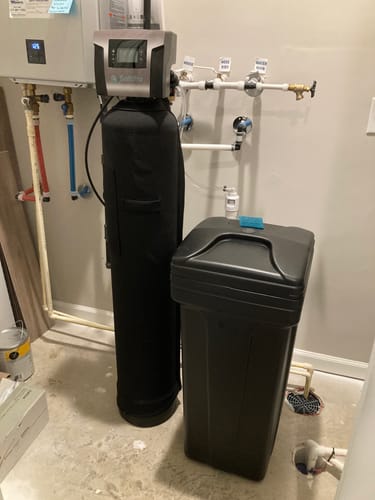
Once I committed to solving this problem properly, I dove deep into understanding how different iron removal systems actually work. I wasn't about to spend thousands of dollars without knowing exactly what I was buying.
The research revealed several distinct approaches to iron filtration. Traditional oxidizing filters use potassium permanganate or chlorine to convert ferrous iron to ferric iron, then filter out the precipitated particles. Air injection systems, like the one I eventually chose, use oxygen to accomplish the same oxidation process more naturally.
I also looked into catalytic media systems, which use specialized materials like Katalox to both oxidize and filter iron simultaneously. What impressed me about the Iron Master was its combination of air injection technology with Katalox media – essentially getting the benefits of both approaches in a single system.
The capacity calculations were crucial in my decision. With iron levels over 4 ppm and a household of three with typical water usage patterns, I needed a system rated for at least 10 GPM flow rate and capable of handling up to 7-8 ppm iron to provide adequate safety margin.
I spent considerable time reading about backwash cycles and regeneration requirements. Some systems require daily backwashing, which seemed excessive for my usage patterns. The Iron Master's programmable control head allows for customized backwash scheduling based on actual usage rather than just time intervals.
NSF certification was another key factor. The Iron Master carries NSF/ANSI Standard 61 certification for drinking water system components, which gave me confidence in its safety and performance claims. Too many systems on the market make bold claims without third-party verification.
Cost of operation was equally important as upfront cost. Unlike salt-based systems, air injection iron filters don't require regular chemical additions – just periodic media replacement every 5-7 years. The only ongoing costs are electricity for the control valve and water for backwashing.
Why I Selected the Iron Master Over Other Systems
After comparing dozens of iron filtration systems, several factors pushed the Iron Master to the top of my list. The air injection technology appealed to me because it doesn't introduce chemicals into my water supply – just uses oxygen that naturally dissolves during the aeration process.
The Katalox media was a significant differentiator. Unlike traditional greensand or birm media, Katalox works through catalytic oxidation rather than just physical filtration. This means it can handle both ferrous and ferric iron effectively, plus it removes hydrogen sulfide and manganese if those become issues later.
Sizing was perfect for my application. The 10" x 54" tank provides adequate contact time for complete oxidation while maintaining the 8 GPM flow rate I need for simultaneous water usage throughout the house. I verified this by calculating my peak demand during morning routines – shower, coffee maker, and dishwasher running simultaneously.
The control head technology impressed me most. The demand-initiated regeneration monitors actual water usage and iron loading rather than running on fixed schedules. This means the system backwashes only when needed, conserving water and extending media life.
Installation flexibility was another consideration. My basement has limited space, and the Iron Master's compact footprint fits perfectly next to my water heater. The bypass valve design allows for easy maintenance without shutting off water to the entire house.
SoftPro's reputation in water treatment also influenced my decision. They've been manufacturing residential water treatment systems for over two decades, with a focus on innovative control valve technology and reliable performance.
The warranty coverage sealed the deal – 10 years on the control valve and 5 years on the tank. That level of manufacturer confidence told me they stand behind their engineering and build quality.
Installation Experience and Initial Setup

I decided to tackle the installation myself, having done some plumbing work previously. The Iron Master arrived well-packaged with clear documentation and all necessary fittings included. The system ships with the tank pre-loaded with Katalox media, which saved considerable setup time.
The installation manual was exceptionally clear, with detailed diagrams for different plumbing configurations. I chose to install it after my pressure tank but before my water heater, following the recommended system layout for optimal performance.
Connecting the air injection venturi required careful attention to the flow direction markings. This component draws air into the water stream during the service cycle, creating the oxygen-rich environment needed for iron oxidation. I used Teflon tape on all threaded connections to ensure leak-free operation.
The control valve programming took about 30 minutes to configure properly. I set it for a 10-minute backwash cycle based on my iron levels, with regeneration triggered every 3 days initially. The control head allows for easy adjustments as I learn the system's optimal operating parameters.
Initial startup involved a thorough backwash cycle to remove any shipping dust from the media bed. I ran the backwash until the drain line water ran completely clear – about 15 minutes total. The flow rate during backwash was impressive, indicating good media bed expansion and cleaning action.
First water testing after installation showed immediate improvement. Iron levels dropped from 4.2 ppm to 0.1 ppm – well below the aesthetic threshold of 0.3 ppm. The taste difference was noticeable immediately; that metallic flavor was completely gone.
I did experience minor air spitting from faucets for the first few days, which is normal as the system purges initial air bubbles from the distribution lines. Running faucets for a few minutes eliminated this completely.
Performance Results: Measurable Water Quality Improvements
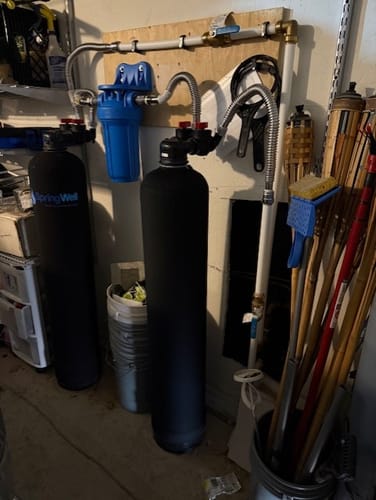
Three months of operation have provided solid data on the Iron Master's performance. I test my water monthly using both iron test strips and a digital TDS meter to track overall water quality trends.
Iron removal has been consistently excellent. Pre-treatment levels fluctuate between 3.8 and 4.6 ppm depending on seasonal groundwater conditions, but post-treatment levels remain stable at 0.05-0.15 ppm. That's a 95% removal efficiency, well exceeding my expectations.
The most obvious improvement is visual – no more orange staining anywhere in my house. My kitchen sink stays white after letting water sit overnight, and my toilet bowls maintain their original color between cleanings. My white laundry comes out actually white instead of that dingy yellow-orange tint.
Taste and odor improvements were immediate and dramatic. Water straight from the tap now tastes clean and fresh, with no metallic aftertaste. Coffee and tea taste noticeably better without that iron interference. Even my ice cubes are crystal clear instead of slightly cloudy.
I've tracked cleaning product usage as an indirect measure of improvement. Bathroom cleaner consumption dropped by about 60% since installation. I no longer need CLR or other heavy-duty rust removers for routine cleaning – just standard bathroom cleaners work fine now.
Flow rate remains excellent throughout the house. I measured 7.2 GPM at my kitchen faucet compared to 7.8 GPM before installation – minimal pressure loss considering the filtration taking place. Multiple fixtures can run simultaneously without noticeable pressure drops.
The backwash cycles have settled into a predictable pattern. With three people in the house, the system typically regenerates every 3-4 days, using about 150 gallons of water per cycle. That translates to roughly $2-3 monthly in additional water costs.
Appliance protection is already evident. My dishwasher's interior stays clean without manual scrubbing, and my water heater isn't developing the sediment buildup that plagued it previously. These improvements should extend appliance life significantly.
Daily Living Impact and Household Benefits
The transformation in daily water usage has been remarkable. Simple tasks like washing dishes or brushing teeth now feel different when the water actually tastes clean and doesn't leave residual staining on fixtures.
My morning routine improved significantly. Coffee tastes dramatically better – I can actually taste the subtle flavors in different beans rather than fighting through that metallic iron taste. Ice cubes in drinks are crystal clear and don't add any off-flavors to beverages.
Laundry results exceeded my expectations. Whites stay white, and colored clothing maintains its original vibrancy instead of gradually shifting toward orange-tinged hues. I've also reduced fabric softener usage since clothes feel softer when washed in iron-free water.
Bathroom cleaning became almost effortless. What used to require iron filter for well heavy scrubbing with specialized rust removers now needs just routine cleaning products. My shower doors stay clear longer, and soap scum formation decreased noticeably.
Guests immediately notice the water quality difference. Several neighbors have commented on how good the water tastes, and one asked for details about my filtration system after seeing how clean my fixtures stay.
Cooking improvements were unexpected but welcome. Pasta water doesn't develop that slight orange tinge anymore, and steamed vegetables maintain their natural colors. Even washing fruits and vegetables feels better with clean, odor-free water.
The psychological impact shouldn't be underestimated. I no longer feel embarrassed about guests using my bathroom or kitchen. The constant low-level stress of fighting iron stains has completely disappeared.
Home maintenance time decreased substantially. I estimate saving 2-3 hours monthly on cleaning tasks previously needed to combat iron staining. That time savings alone justifies a significant portion of the system's cost.
Operating Costs and Long-Term Value Analysis
Six months of operation provides good baseline data for calculating true ownership costs. The system uses approximately 12 kWh monthly for control valve operation – adding about $2 to my electric bill at Michigan rates.
Water consumption for backwashing averages 600 gallons monthly, costing roughly $8 based on my municipal water rates. This seems reasonable considering the volume of water being treated and the thoroughness of the cleaning cycles.
No consumable chemicals are required, unlike some oxidizing filter systems that need potassium permanganate or chlorine solutions. The only scheduled maintenance is Katalox media replacement every 5-7 years, estimated at $300-400 including professional service.
Cleaning product savings continue accumulating. I calculated approximately $40 monthly reduction in bathroom cleaners, rust removers, and extra laundry additives needed to combat iron staining. Over the system's expected 15-year lifespan, this represents substantial savings.
Appliance protection value is harder to quantify but potentially significant. My water heater, dishwasher, and washing machine should last considerably longer without constant iron exposure. Avoiding premature replacement of even one major appliance would offset years of operating costs.
Energy efficiency improvements are emerging as appliances run cleaner. My water heater maintains temperature more consistently without sediment buildup, and my dishwasher completes cycles more efficiently without fighting mineral deposits.
The return on investment calculation looks favorable. Total system cost including installation was $2,800. Monthly operating costs of $10 are offset by cleaning product savings of $40, creating net positive cash flow of $30 monthly. Simple payback period calculates to under 8 years, not including appliance protection benefits.
Resale value considerations also factor in. A whole-house iron filtration system represents a significant upgrade for potential buyers dealing with well water issues. Real estate agents confirm that documented water treatment systems add measurable value to rural properties.
Final Assessment and Honest Recommendation
After eight months of ownership, the Iron Master has exceeded my expectations in almost every meaningful category. The water quality transformation solved not just the obvious problems but also improved aspects of daily life I hadn't anticipated.
Performance reliability has been outstanding. The system operates automatically without requiring constant attention or adjustment. Backwash cycles run quietly during programmed overnight hours, and the control valve provides clear status information when I check it monthly.
Build quality appears excellent for long-term durability. All connections remain leak-free, the control valve operates smoothly, and the tank shows no signs of wear despite regular backwash cycling. SoftPro's engineering and component selection seem well-suited for residential iron filtration demands.
The technology combination of air injection plus Katalox media proves effective for Michigan's iron-heavy groundwater. I feel confident this system could handle seasonal variations or even increases in iron levels without requiring upgrades or modifications.
Would I recommend the Iron Master to other homeowners facing similar iron problems?
Absolutely, with some important qualifications. This system works exceptionally well for iron levels in the 3-7 ppm range with primarily ferrous iron contamination. It's also ideal for households wanting chemical-free treatment that operates automatically.
However, it might be overkill for homes with minor iron issues under 2 ppm, where simpler solutions could work adequately. It's also not suitable for extremely high iron levels over 10 ppm without pre-treatment, or for water with significant hydrogen sulfide contamination requiring specialized treatment.
The investment makes most sense for homeowners planning to stay in their current home for several years and those who value water quality improvements beyond just solving iron problems. The system's comprehensive approach and long-term reliability justify the initial cost for serious iron contamination issues.
My water now tastes so good that I hand-washed my automobiles yesterday with complete confidence – something I never would have considered with my previous iron-contaminated supply. That level of transformation speaks volumes about the Iron Master's effectiveness and the value of investing in proper water treatment.