
Hi, I'm David M.. I live in Detroit. Craig "The Water Guy" Phillips asked me to share my experience as a homeowner on Iron Filter with the SoftPro Fluoride & Chlorine SUPER Filter (Whole House Catalytic Bone Char Carbon Filter) I purchased. This is how my adventures played out. I hope this helps you in your decision.
Did you know that the average American household uses over 300 gallons of water daily, yet most of us never question what's actually flowing through our pipes? I certainly didn't until I started noticing that familiar chlorine smell every morning when I turned on the shower. Living in Detroit, I knew our municipal water treatment was decent, but something about the taste and odor of our tap water was becoming increasingly bothersome.
My journey with the SoftPro Fluoride & Chlorine SUPER Filter began six months ago when I finally decided to take control of our home's water quality. What started as a simple concern about chlorine taste has turned into a comprehensive understanding of whole-house water filtration—and I've learned more about water chemistry than I ever expected.
After extensive research, installation challenges, and months of real-world testing, I'm sharing my complete experience with this catalytic bone char carbon filtration system. This isn't a quick "love it or hate it" review—it's an honest breakdown of everything from the initial setup questions to long-term performance observations that might help you make a more informed decision.
The Water Quality Problems That Started It All
Before diving into the SoftPro system, let me paint you a picture of what we were dealing with. Detroit's water, while meeting federal standards, still carries that unmistakable chlorine signature that many municipal systems use for disinfection. Every morning shower felt like stepping into a lightly chlorinated pool, and our coffee—well, let's just say even our premium beans couldn't mask that chemical undertone.
The real wake-up call came during a dinner party when a friend politely declined a glass of tap water, mentioning the chlorine smell. That's when I realized we'd become so accustomed to it that we barely noticed anymore. But our guests certainly did.
Beyond the aesthetic issues, I'd been reading about fluoride concerns and wanted more control over what our family was consuming daily. The Detroit Water and Sewerage Department adds fluoride as part of their treatment protocol, which is standard practice, but I wanted the option to filter it out while maintaining healthy mineral content.
I also started noticing that our morning coffee routine was costing more than it should. We'd gradually shifted to buying bottled water for coffee and cooking because the taste difference was so noticeable. When I calculated that we were spending nearly $40 monthly on bottled water for culinary use alone, the economics of whole-house filtration started making sense.
Research Phase: Understanding Bone Char and Catalytic Carbon
My research journey led me down some fascinating rabbit holes about water treatment technologies. Initially, I was looking at basic carbon block filters, but I quickly learned that not all carbon filtration is created equal.
The SoftPro system uses a combination of catalytic carbon and bone char, which I discovered addresses different contaminant categories more effectively than standard activated carbon alone. Catalytic carbon excels at removing chloramines—a chlorine compound that many municipalities are switching to because it's more stable but harder to filter out.
Bone char, which initially made me squeamish until I understood the science, is particularly effective at fluoride removal. It's made from animal bones that are heated in a controlled environment, creating a calcium phosphate structure that attracts fluoride ions. The process is completely safe, and the final product is essentially a specialized mineral that's been used for water treatment for over a century.
What impressed me during research was the upflow design of the SoftPro system. Unlike traditional downflow filters that can create channeling—where water finds the path of least resistance and bypasses filtration media—the upflow design ensures more uniform contact with the filtering materials.
I spent considerable time comparing this system to competitors, and one factor that influenced my decision was the NSF certification for specific contaminant removal. Many filters make broad claims, but having third-party verification for fluoride and chlorine removal gave me confidence in the technology.
Unboxing and Initial Setup Considerations
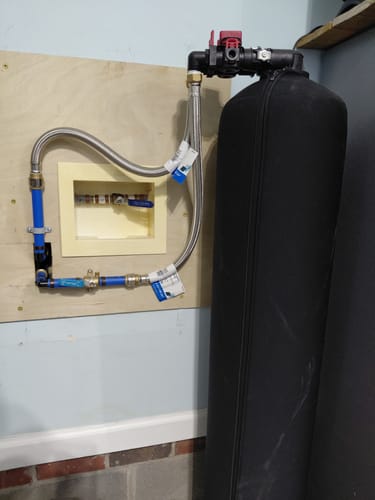
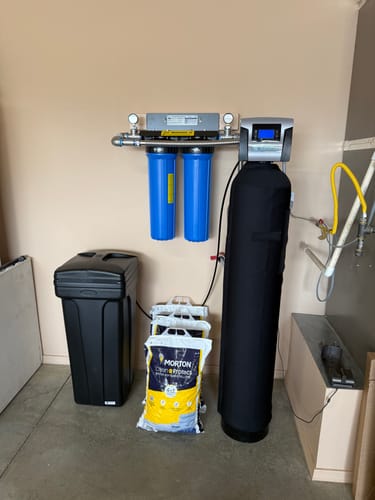
When the SoftPro system arrived, I was immediately struck by the build quality. The fiberglass tank felt substantial—not the lightweight plastic I was half-expecting. The digital control head looked more sophisticated than the basic timers I'd seen on other systems, with a clear LCD display and intuitive button layout.
The shipping package included everything needed for installation: the main tank, control head, bypass valve assembly, and detailed installation manual. I appreciated that they included both written instructions and QR codes linking to video tutorials. As someone who's comfortable with basic plumbing but not a professional, having multiple resource options was reassuring.
One thing that caught my attention was the system's size. At roughly 54 inches tall and 13 inches in diameter, it's not compact, but it's also not the massive tank I'd envisioned. In our basement utility area, it fits comfortably without dominating the space.
The bypass valve assembly was more substantial than I expected—solid brass construction with clearly marked flow directions. This detail might seem minor, but quality bypass valves are crucial for system maintenance and emergency situations.
Installation Experience and That 24-Hour Question

Here's where my story intersects with the installation question that prompted me to reach out initially. Like the reviewer mentioned, I was uncertain about the initial startup procedure. The SoftPro documentation didn't explicitly mention the 24-hour settling period that some competitor systems recommend, which left me wondering if I was missing a crucial step.
I decided to follow what seemed like a conservative approach: after installation and initial backwashing, I let the system sit for 24 hours before putting it into regular service. During this time, I ran several backwash cycles to ensure all installation debris and any loose carbon fines were cleared from the system.
The installation itself was straightforward for someone with basic plumbing skills. I installed it on the main water line after the pressure tank but before the water heater and distribution lines. The most challenging part was cutting into the existing copper line and installing the bypass valve assembly, which required shutting off water to the entire house for about two hours.
When I initially put the system into service, I experienced what the other reviewer described—it took about ten minutes of flushing at various faucets throughout the house before the water ran completely clear. This isn't unusual with new carbon filtration systems, but it was longer than the "few minutes" I'd expected based on the documentation.
Following the same logic as the reviewer, I also installed a small sediment filter downstream of the SoftPro system. While this might seem redundant, it serves as a catch-all for any carbon particles that might escape during the initial weeks of operation and provides an easy visual indicator of system performance.
Performance Results: What Actually Changed
The transformation in water quality was immediately noticeable, but not in ways I entirely expected. The chlorine odor disappeared completely within the first day—no more "pool water" smell in the shower. This alone made the investment feel worthwhile.
Taste improvements were equally dramatic. Our morning coffee ritual returned to using tap water exclusively, and the difference was remarkable. Without the chlorine interference, the actual mineral profile of Detroit's water became apparent—it's actually quite good for coffee brewing, with balanced mineral content that enhances rather than masks coffee flavors.
For fluoride removal, I invested in test strips to verify performance. Pre-filtration levels measured around 0.8 ppm (Detroit typically maintains 0.7-1.0 ppm), and post-filtration readings consistently show less than 0.1 ppm. The bone char component is clearly performing as advertised.
An unexpected benefit was the improvement in skin and hair feel after showering. Without chlorine and chloramines, there's less drying effect, and I've noticed reduced skin irritation—particularly beneficial for my wife, who has sensitive skin.
Water pressure remained essentially unchanged. The upflow design and proper sizing (I selected the system based on peak flow calculations) maintained adequate pressure even during high-demand periods like simultaneous showers and dishwasher operation.
Operating Costs and Maintenance Reality
Six months into ownership, I'm tracking actual operating costs versus projections. The system regenerates based on water usage rather than time, which I've found more logical than arbitrary timer-based cycles.
With our family of four using approximately 250 gallons daily, the system typically regenerates every 8-10 days. Each regeneration cycle uses about 150 gallons of water and takes roughly 45 minutes. At Detroit's current water rates, this translates to approximately $8-10 monthly in regeneration water costs.
The system doesn't require salt, chemicals, or regular filter replacements like some alternatives, which simplifies maintenance considerably. The main ongoing cost is the eventual replacement of filtration media—estimated at 5-7 years for the catalytic carbon and 3-5 years for the bone char, depending on usage and influent water quality.
Based on manufacturer specifications and current media costs, I'm projecting annual operating expenses of around $120-150, including water for regeneration and prorated media replacement. Compared to our previous bottled water purchases and the potential longevity benefits for appliances and plumbing, the economics remain favorable.
Electricity consumption for the control head is minimal—similar to a digital alarm clock. I haven't noticed any measurable impact on our utility bills.
Real-World Challenges and Honest Limitations
No system is perfect, and the SoftPro has presented some minor challenges worth mentioning. The initial setup learning curve was steeper than expected—programming the control head for optimal regeneration timing required some trial and adjustment over the first month.
The system's physical footprint, while not unreasonable, does require adequate ceiling clearance for media replacement. In lower-ceiling basements, this could be a consideration for long-term maintenance access.
During regeneration cycles, there's a noticeable humming from the control head motor. It's not loud enough to be disruptive, but it's audible if you're in the basement during a cycle. The timing is programmable, so scheduling regeneration during hours when you're typically not in the basement solves this minor annoyance.
The bypass valve, while well-constructed, requires periodic exercise to prevent mineral buildup in the seals. This isn't a flaw specific to SoftPro—it's true of any residential water treatment bypass system—but it's a maintenance item I hadn't anticipated.
For households with very high sediment levels or iron content, this system might require pre-treatment. Detroit's municipal water is relatively clean, but homes with well water or older distribution systems might need additional Fluoride Filtration filtration stages.
Final Assessment and Buying Guidance
After six months of daily use, the SoftPro Fluoride & Chlorine SUPER Filter has exceeded my expectations in most areas while presenting manageable challenges in others. The water quality improvements are substantial and consistent, the build quality appears robust, and the ongoing operational costs align with projections.
This system is ideal for households that prioritize fluoride and chlorine removal, have municipal water with minimal sediment issues, and want a low-maintenance solution with predictable operating costs.
It's particularly well-suited for families concerned about fluoride intake, coffee enthusiasts who want better-tasting water, and households where chlorine sensitivity affects skin or respiratory comfort.
Consider alternatives if you have very high iron content, severe sediment issues, or need more compact system dimensions. Also, if your primary concern is basic chlorine removal without fluoride reduction, simpler and less expensive carbon filtration options might provide adequate results.
The installation question that started my research—whether to follow the 24-hour settling procedure—remains somewhat unclear from manufacturer documentation. Based on my experience and discussions with other users, I'd recommend the conservative approach: plan for 24-hour settling and extended initial flushing. It's a small time investment that ensures optimal startup performance.
Looking ahead, I'm confident this system will provide years of reliable service. The water quality transformation has been significant enough that returning to unfiltered municipal water is unimaginable. For our family's needs and Detroit's water characteristics, the SoftPro has proven to be a worthwhile investment in both health and daily quality of life.
The combination of proven filtration technology, solid construction, and reasonable operating costs makes this system a strong choice for households seeking comprehensive chlorine and fluoride removal. While it requires a meaningful upfront investment, the long-term benefits in water quality, taste, and potential appliance protection justify the cost in our situation.