
Hi, I'm Mateo Ros. I live in Tampa. Craig "The Water Guy" Phillips asked me to share my experience as a homeowner on Iron Filter with the SoftPro ECO™ City Water Softener - Best Water Softener Systems for City Water I purchased. This is how my adventures played out. I hope this helps you in your decision.
Eighteen months ago, I was at my wit's end with Tampa's notoriously hard water. Every morning brought the same frustration: crusty white residue coating my coffee maker, soap scum that seemed impossible to scrub away, and that uncomfortable feeling on my skin after every shower.
My wife constantly complained about how quickly our clothes were losing their softness, and I was getting tired of replacing appliances that should have lasted years longer. The final straw came when our relatively new dishwasher started leaving spots on everything, despite using expensive rinse aids and premium detergents.
After countless hours researching water softening solutions and reading through technical specifications that initially made my head spin, I decided on the SoftPro ECO City Water Softener. Now, after living with this system for over a year and a half, I want to share the real story of what it's like to own and operate this unit in a Tampa household.
The Hard Water Problem That Drove Me to Act
Living in Tampa, I thought hard water issues were just something you accepted as part of homeownership. But did you know that Tampa's water hardness averages between 8-12 grains per gallon?
That puts us firmly in the "very hard" category, which explains why I was constantly battling mineral buildup throughout our home.
The problems weren't just cosmetic annoyances. I started calculating the real costs: replacing our water heater's heating elements twice in three years, constantly buying CLR and other mineral-removal products, and watching our monthly detergent expenses climb as we used more and more soap trying to get things clean.
My morning routine had become a exercise in frustration. The showerhead would clog with mineral deposits every few weeks, requiring me to unscrew it and soak it in vinegar overnight. Our glass shower doors looked perpetually dirty no matter how much I scrubbed, and the faucet aerators needed constant attention.
But the real wake-up call came when a plumber told me our hot water heater was likely operating at only 60% efficiency due to scale buildup. He explained how calcium and magnesium ions bond to heating elements and interior surfaces, creating an insulating layer that forces the system to work harder and use more energy.
I realized I wasn't just dealing with cleaning inconveniences – I was looking at thousands of dollars in premature appliance replacement and inflated utility bills. That's when I started seriously researching water softening solutions, diving deep into the science of ion exchange and researching systems that could handle Tampa's specific water chemistry challenges.
My Research Journey and Why I Chose SoftPro ECO
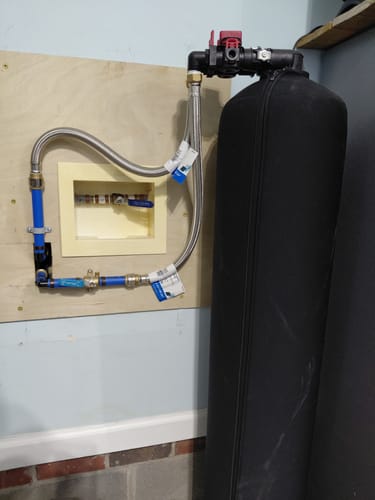
I spent nearly two months researching water softener options, and let me tell you, the learning curve was steep. Initially, I was overwhelmed by technical terms like "resin capacity," "regeneration cycles," and "grain removal ratings." But as I dug deeper, I began understanding how these specifications translate to real-world performance.
The first thing I learned was that not all water softeners are created equal. What's the difference between a basic salt-based system and a high-efficiency model like the SoftPro ECO?
The answer lies in the control valve technology and regeneration efficiency.
Traditional timer-based systems regenerate on a fixed schedule regardless of actual water usage, which wastes salt and water. The SoftPro ECO uses demand-initiated regeneration, meaning it only cleans itself when the resin bed is actually exhausted. This appealed to my engineering mindset – why waste resources on unnecessary cycles?
I also discovered that resin quality varies significantly between manufacturers. The SoftPro ECO uses high-capacity, food-grade ion exchange resin that's designed to last 10-15 years under normal conditions. Cheaper systems often use lower-grade resin that degrades faster and requires more frequent replacement.
The decision ultimately came down to three factors: efficiency, reliability, and long-term value. The SoftPro ECO's Vortech tank design caught my attention because it eliminates the need for a separate mineral tank and reduces the system's footprint by about 30%. In our utility room, space was definitely a consideration.
I was also impressed by the system's NSF certification for both performance and structural integrity. Living in Florida, where humidity and temperature fluctuations can be extreme, I wanted equipment built to handle environmental challenges without degrading.
The final selling point was the calculated operating costs. Based on our family's water usage patterns (about 300 gallons per day), the high-efficiency regeneration cycle would use approximately 40% less salt than conventional systems. Over ten years, that translates to significant savings in both salt costs and water consumption.
Delivery and First Impressions
The SoftPro ECO arrived exactly when promised, packaged in a way that immediately communicated quality. Unlike some appliances I've received that looked like they'd been through a demolition derby, this unit was secured in custom-fitted foam inserts and arrived in perfect condition.
My first impression upon unpacking was how compact the system actually is. The specifications listed the dimensions, but seeing it in person, I was pleasantly surprised by the space efficiency. The main tank stands about 48 inches tall and 10 inches in diameter – significantly smaller than the bulky two-tank systems I'd been considering.
The build quality was immediately apparent. The control head felt solid and substantial, with a clear digital display that was easy to read even in our dimly lit utility room. The tank itself has a attractive blue color that looks more like a piece of modern equipment than industrial machinery.
What really impressed me was the attention to detail in the component quality. The bypass valve was already installed and felt robust when I operated it. The electrical connections were clean and professional-looking, and even small details like the drain line fitting showed thoughtful engineering.
The installation manual was comprehensive without being overwhelming. Clear diagrams showed exactly where each component fit, and the troubleshooting section answered questions I hadn't even thought to ask yet. I particularly appreciated that they included specific guidance for different plumbing configurations, including the PEX setup we have in our house.
Installation Experience and Initial Setup

I decided to tackle the installation myself, partly to save money but mostly because I wanted to understand exactly how the system worked. The process took me about four hours, including time to make a couple of trips to Home Depot for additional fittings.
The most challenging part was locating the optimal installation point. The system needs to be positioned after the main water line enters the house but before it branches to the hot water heater and fixtures. In our case, that meant working in a tight space behind the water heater, which required some creative positioning.

I had to install a 120V electrical outlet for the control head, which required running about 15 feet of cable from our electrical panel. Why does a water softener need electricity?
The digital control valve uses a small motor to operate the regeneration cycles and maintain the programming schedule. The power consumption is minimal – less than a nightlight – but the electrical connection is essential for automated operation.
The plumbing connections were straightforward once I understood the flow direction. The system includes clearly marked "in" and "out" ports, and the bypass valve allows you to isolate the unit for maintenance without shutting off water to the entire house. I used SharkBite fittings for most connections, which made the job much faster than traditional soldering.
Initial startup was exciting and nerve-wracking simultaneously. After slowly opening the inlet valve and checking for leaks, I programmed the control head with our water hardness level (10 grains per gallon based on a recent test) and our household size. The system automatically calculated optimal regeneration frequency and salt dosage.
The first regeneration cycle ran that night, taking approximately 90 minutes from start to finish. I stayed up to listen to the process, which involves a series of backwash, brine draw, rinse, and refill steps. The system operates quietly – much quieter than our dishwasher or washing machine – producing only a gentle humming sound during valve transitions.
Performance Testing and Real-World Results
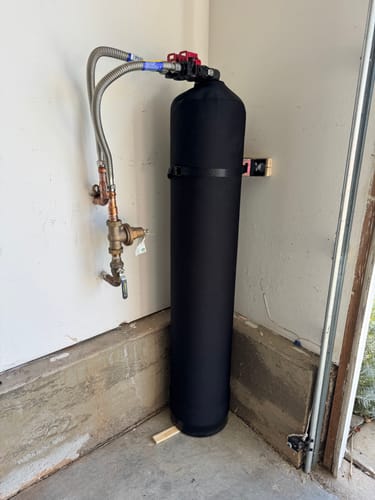
The transformation didn't happen overnight, but within 48 hours, I started noticing significant differences throughout our home. The most immediate change was in the shower – that slippery feeling that indicates truly soft water, and the complete absence of soap scum formation on the glass doors.
I decided to document the changes systematically, so I purchased a digital TDS (Total Dissolved Solids) meter and hardness test strips to track actual performance numbers. Before installation, our tap water measured 180-200 TDS and tested at 10 grains per gallon hardness. After the SoftPro ECO system, those numbers dropped to 95-110 TDS and 0-1 grains per gallon.
But what do those numbers actually mean in daily life?
The difference became obvious in ways I hadn't even anticipated.
Our coffee maker, which had been producing increasingly bitter coffee due to mineral buildup, suddenly started making coffee that tasted like it did when we first bought the machine. I realized I'd gradually gotten used to the off-flavors caused by scale accumulation, not recognizing how much it had degraded the taste.
Laundry results were dramatic. Clothes felt softer without fabric softener, colors appeared brighter, and white items stayed whiter longer. My wife, who's particular about laundry quality, noticed that we were using about 30% less detergent to achieve better cleaning results. The ion exchange process removes minerals that interfere with soap effectiveness, allowing detergents to work as they're designed to.
Kitchen cleanup became noticeably easier. Dishes came out of the dishwasher actually clean, without spots or film. Pots and pans that had developed stubborn white deposits gradually became easier to clean as existing scale loosened and new buildup stopped forming.
I tracked our household soap and cleaning product consumption for six months post-installation and found we were using approximately 40% less dish soap, 25% less shampoo, and had completely eliminated our monthly CLR purchases. These savings alone offset a significant portion of the system's operating costs.
Daily Living Impact and Family Feedback
The most surprising changes were the ones I hadn't expected or researched in advance. My wife, who has sensitive skin, noticed within a week that her usual post-shower dryness and irritation had virtually disappeared. She'd been using expensive moisturizing body washes and lotions to combat what we thought was just Florida's low humidity effects.
Our teenage daughter, who's particular about her hair, started commenting that her hair felt different – softer and more manageable. She'd been using increasingly expensive shampoos and conditioners trying to combat what she thought was damage from Tampa's chlorinated water, not realizing that mineral deposits were coating her hair strands.
Have you ever noticed how your skin feels different in various cities when you travel?
Water quality plays a huge role in that experience, and we'd become so accustomed to Tampa's hard water that we'd forgotten how soft water should feel.
Kitchen tasks became genuinely more pleasant. Hand-washing dishes required less scrubbing, and glassware dried without spots even when air-dried. Ice cubes from our refrigerator dispenser became crystal clear instead of the slightly cloudy appearance they'd had before.
Our housecleaner mentioned that bathroom surfaces were staying cleaner longer and required less aggressive scrubbing to maintain. The glass shower doors that had required weekly CLR treatments now stayed clear with just regular cleaning.
Even unexpected items showed improvement. Our humidifiers, which had required monthly descaling during Florida's drier winter months, ran for an entire season without mineral buildup. The ultrasonic units that had been producing white dust residue on nearby furniture stopped creating that problem entirely.
Visitors started commenting on our water quality, particularly when making coffee or tea. Several people asked if we'd installed a filtration system, not realizing that mineral removal could so significantly impact taste and clarity.
Operating Costs and Long-Term Efficiency
After eighteen months of operation, I can provide accurate data on the real costs of owning the SoftPro ECO system. The numbers have been better than my initial projections, primarily due to the system's efficiency and our reduced consumption of cleaning products.
Salt consumption averages 40 pounds every 6-8 weeks for our family of four. At current prices, that translates to approximately $8-12 monthly in salt costs. The high-efficiency regeneration cycle uses about 25 gallons of water per cycle, occurring roughly twice per month based on our usage patterns.
Electricity consumption is negligible – the control head draws less than 5 watts during operation and enters a sleep mode between cycles. My utility monitoring showed the system adds less than $2 per month to our electrical bill.
But what about the savings generated by the system?
This is where the economics become interesting.
Our hot water heater efficiency improved noticeably. Without scale formation, the heating elements maintain direct contact with water, reducing energy consumption by an estimated 15-20%. In Florida's climate, where we use hot water year-round, this translates to $15-25 monthly savings on our electrical bill.
Cleaning product consumption dropped dramatically. We eliminated CLR purchases entirely ($8-12 monthly), reduced dish soap usage by about 40% ($3-5 monthly savings), and cut shampoo and body wash consumption by roughly 25% ($8-15 monthly). These may seem like small amounts individually, but they add up to $35-55 in monthly savings.
Appliance longevity improvements are harder to quantify short-term, but I'm confident our dishwasher, coffee maker, and water heater will last significantly longer without constant mineral exposure. The insurance aspect alone – avoiding premature replacement costs – provides substantial value.
Including salt and electricity costs against cleaning product savings and energy efficiency improvements, the system essentially pays for its own operation while providing all the quality-of-life benefits. The payback period for the initial investment is tracking toward 4-5 years when including appliance protection value.
Maintenance Experience and System Reliability
One of my main concerns before purchasing was ongoing maintenance complexity. Eighteen months in, I'm pleased to report that the SoftPro ECO has been remarkably low-maintenance and trouble-free.
The primary maintenance task is keeping the salt tank filled. The system provides a low-salt indicator on the control display, typically alerting me when about 50 pounds remain in the tank. I've established a routine of checking salt levels monthly and purchasing bags best water softener when they go on sale at home improvement stores.
The digital control head tracks regeneration cycles and provides diagnostic information if issues arise. So far, I've only needed to consult the manual once, when I accidentally bumped the programming buttons and needed to reset the clock after a power outage.
I performed my first annual maintenance check six months ago, which involved inspecting connections for leaks, cleaning the salt tank, and verifying that the bypass valve operated smoothly. The entire process took about 30 minutes and required no special tools or technical expertise.
What happens if something goes wrong with a water softener system?
The SoftPro ECO includes built-in diagnostics that display error codes for common issues like power failures, blocked drain lines, or salt bridging problems.
The resin bed, which is the heart of the ion exchange process, shows no signs of degradation or reduced performance. According to the manufacturer specifications, the high-capacity resin should last 10-15 years under normal conditions, and our system continues performing like new.
I've been impressed by the system's tolerance for Tampa's variable water pressure and occasional utility maintenance shutoffs. The control head automatically adjusts for pressure fluctuations and resumes normal operation after service interruptions without requiring manual intervention.
The only minor issue I've encountered is salt bridging, which occurred once during an unusually humid summer month. This happens when humidity causes salt to form a crust that prevents proper brine formation. The solution was simple – breaking up the bridge with a broom handle and ensuring adequate ventilation in the utility room.