
Hi, I'm Ronald M.. I live in California. Craig "The Water Guy" Phillips asked me to share my homeowner experience with local tap water from the city and the SoftPro ECO™ City Water Softener - Best Water Softener Systems for City Water I purchased. This is how my adventures played out. I hope this helps you in your decision.
The Water Quality Problem That Started Everything
Eight months ago, I thought my water was perfectly fine. Sure, I'd notice some spots on my glassware occasionally, but I figured that was softpro water softener just normal city water stuff. Boy, was I wrong.
The wake-up call came when my wife started complaining about her hair feeling "weird" after showers. Then I noticed our coffee maker was taking longer to brew, and when I looked inside, there was this chalky white buildup around the heating element. That's when I realized we had a hard water problem that was quietly damaging our appliances and affecting our daily comfort.
Living in California, I discovered our municipal water supply contained about 12 grains per gallon of hardness - primarily calcium and magnesium minerals. While not harmful to drink, these minerals were wreaking havoc on everything from our plumbing fixtures to our skin and hair.
The financial impact hit me when our water heater started making strange noises.
A plumber's inspection revealed significant mineral buildup reducing efficiency by nearly 30%. He estimated we'd need a replacement within two years instead of the typical 8-10 year lifespan. That potential $1,200 expense, combined with rising energy bills and constant appliance cleaning, made investing in a water softener an obvious choice.
Research Journey: Why I Chose the SoftPro ECO
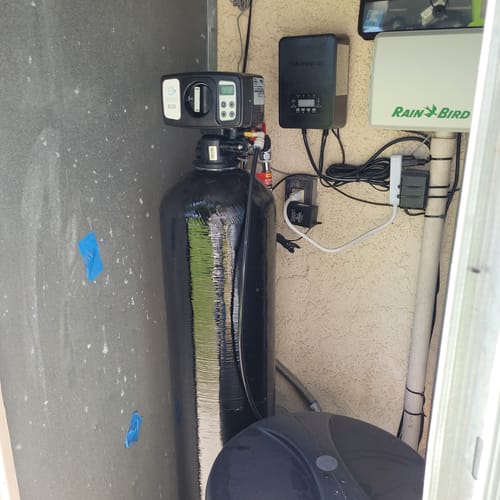
I'll be honest - I knew absolutely nothing about water softeners when I started researching. Did you know that there are actually several different technologies for treating hard water?
I spent weeks diving deep into ion exchange systems, salt-free conditioners, and reverse osmosis setups. The more I learned, the more I realized that traditional ion exchange softeners were the gold standard for actually removing hardness minerals, not just conditioning them.
The SoftPro ECO caught my attention for several key reasons. First, it uses high-capacity resin that's rated for 48,000 grains - perfect for our household of four with moderate water usage. Second, the demand-initiated regeneration meant it would only regenerate when needed, saving both salt and water compared to timer-based systems.
What really sold me was the SoftPro Valve technology.
Unlike cheaper systems that use basic mechanical timers, the SoftPro Valve includes digital metering that tracks actual water usage. This means regeneration cycles are based on real consumption, not guesswork. For someone trying to minimize environmental impact while maximizing efficiency, this feature was crucial.
I also appreciated that SoftPro manufactures their systems in the USA with NSF certified components. After reading horror stories about cheaper imports failing within months, investing in quality engineering seemed wise for a system I'd depend on daily.


Unboxing and First Impressions
The SoftPro ECO arrived via freight delivery - this thing is substantial. At about 200 pounds when loaded with salt, it's definitely not something you casually move around. The packaging was excellent with heavy-duty strapping and protective foam.
Opening everything up, I was immediately impressed by the build quality. The fiberglass tank has a thick, professional-grade finish that looks like it'll last decades. The SoftPro Valve mounted on top feels solid and substantial - no cheap plastic components that might crack under pressure.

The documentation package was thorough, including installation guides, warranty information, and a detailed owner's manual.
All the necessary fittings were included: bypass valve assembly, drain line fittings, and even the salt grid for the brine tank. The only items I needed to purchase separately were standard plumbing supplies specific to my installation location.
One detail that impressed me was the resin quality. SoftPro uses premium grade ion exchange resin that's pre-cleaned and ready for service. Cheaper systems sometimes use lower-grade resin that can take weeks to fully activate.
Installation Experience: Easier Than Expected

I considered hiring a plumber but decided to tackle installation myself. How hard could it be, right?
The installation took me about four hours on a Saturday morning, including a trip to the hardware store for additional pipe fittings. The most challenging part was connecting to my existing plumbing - not because the SoftPro system was difficult, but because my house's original plumbing had some quirky routing.
The SoftPro ECO requires three connections: inlet, outlet, and drain. The bypass valve assembly makes maintenance easy by allowing you to route water around the system when needed. I installed mine in the garage near the water heater, which provided easy access to power and a floor drain.
Programming the SoftPro Valve was surprisingly straightforward.
You input your water hardness level (which I had tested at 12 grains), household size, and preferred regeneration time. The system calculates optimal regeneration frequency automatically. I set mine to regenerate at 2:00 AM to avoid any water pressure interruptions during daily use.
Initial startup went smoothly. The system ran its first regeneration cycle immediately to condition the resin bed. Within hours, I was getting consistently soft water throughout the house.
Performance Results: The Numbers Don't Lie
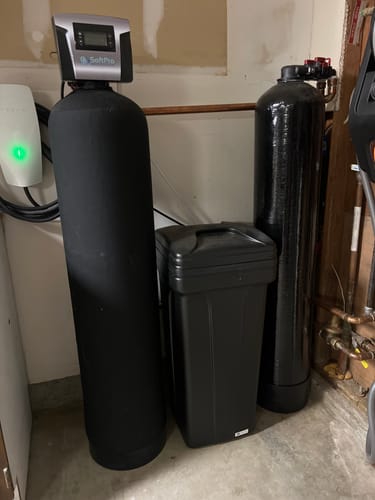
Testing water quality before and after installation revealed dramatic improvements. My initial hardness reading of 12 grains per gallon dropped to less than 1 grain post-softener - essentially completely soft water.
The difference was immediately noticeable in daily use.
Soap lathers better, requiring about 60% less dish soap and laundry detergent for the same cleaning power. My wife noticed her hair felt softer and less tangled after the first shower. Even our dog seems to enjoy bath time more without the harsh mineral residue.
Appliance performance improved significantly. Our dishwasher, which had been leaving spots on glassware despite using rinse aid, now produces sparkling clean results. The coffee maker heats faster and hasn't developed any new mineral deposits in eight months of use.
The water heater efficiency improvement was measurable on our energy bills.
Our monthly gas costs dropped by approximately $15-20, which adds up to real savings over time. The system is paying for itself through reduced energy consumption and extended appliance life.
Regeneration frequency has been exactly as predicted - about every 8-10 days with our usage patterns. Each cycle uses approximately 35 gallons of water and 2 pounds of salt, which seems reasonable for the level of treatment provided.
Daily Living Impact: Beyond Just Soft Water
The quality of life improvements extend far beyond technical specifications. Our morning routines are genuinely more pleasant now.
Showers feel luxurious rather than harsh. Soap doesn't leave that sticky film feeling, and shampoo rinses clean without residue. My wife's sensitive skin, which often became irritated after long showers, no longer reacts negatively to our water.
Household cleaning became significantly easier. Bathroom fixtures that previously required weekly scrubbing to remove mineral buildup now stay clean with basic wiping. Our glass shower doors, which were permanently clouded with hard water spots, cleared up completely within a month.
Kitchen tasks improved dramatically too.
Washing dishes by hand became more effective, with grease cutting through easily and no water spots on glassware. Ice cubes from our refrigerator are crystal clear instead of cloudy. Even cooking improved - pasta water boils faster and vegetables seem to retain better color and texture.
Laundry results exceeded expectations. Whites stay brighter, colors remain vibrant, and fabrics feel softer without additional fabric softener. Our washing machine's efficiency improved as detergent works more effectively in soft water.
Operational Costs and Long-Term Value
Let's talk numbers because ongoing costs matter for any household investment. Monthly operational expenses are quite reasonable.
Salt consumption averages about 50 pounds per month for our family of four. At roughly $6 per 40-pound bag from our local hardware store, that's about $7.50 monthly in salt costs. The system uses standard sodium chloride pellets - no expensive specialty salts required.
Water usage for regeneration adds approximately $8-10 monthly to our utility bill, depending on seasonal rates. Electricity consumption is minimal since the SoftPro Valve uses only a few watts during operation.
The savings offset these costs significantly.
Reduced detergent usage saves about $20 monthly across dish soap, laundry detergent, and cleaning supplies. Lower energy bills from improved water heater efficiency add another $15-20 in savings. We've essentially eliminated bottled water purchases, saving approximately $30 monthly.
Total net savings exceed operational costs by roughly $40-50 monthly. Over the system's expected 15-20 year lifespan, the financial benefits are substantial beyond the quality of life improvements.
Honest Assessment: What Could Be Better
No product is perfect, and transparency matters when making significant household investments. Here are the limitations I've discovered.
The physical footprint requires dedicated space. Our garage installation works well, but basement or utility room placement would be ideal. The system measures about 54 inches tall and 22 inches in diameter - not exactly compact for smaller homes.
Salt loading can be physically demanding. Carrying 40-pound bags and pouring them into the brine tank isn't difficult, but it's not convenient for everyone. Consider delivery services if mobility is a concern.
The regeneration process is audible if installed near living spaces.
While not excessively loud, the backwash and rinse cycles create water flow sounds for about 90 minutes. Scheduling regeneration during sleeping hours minimizes disruption, but it's worth considering placement carefully.
Initial water taste changed slightly due to increased sodium content from the ion exchange process. Most people don't notice, but those on strict low-sodium diets might want to consider a separate drinking water system or salt-free alternatives for consumption.
The digital display, while functional, isn't the most intuitive interface. Basic operation is straightforward, but accessing advanced settings requires consulting the manual. A more modern touchscreen interface would improve user experience.