
Hi, I'm Gary A.. I live in Arizona.
Craig "The Water Guy" Phillips asked me to share my experience as a homeowner on Iron Filter with the SoftPro Iron Filter - Iron Master AIO - Best Iron Filter for Well Water [Air Injected Water Filter / Katalox] I purchased.
This is how my adventures played out. I hope this helps you in your decision.
Did you know that iron contamination affects over 25% of American well water systems?
If you're dealing with rusty, metallic-tasting water that leaves orange stains on everything it touches, you're not alone. I've been battling this exact problem for years, watching my previous filtration system struggle with our sky-high iron levels while simultaneously destroying our water pressure.
After installing the SoftPro Iron Master just a few days ago, I'm already seeing results that frankly surprised me. This single unit is handling what two previous iron filters couldn't manage – and it's doing so without the pressure loss that made our daily routines frustrating.
In this detailed review, I'll walk you through my entire experience: from discovering our extreme iron levels to installation day, and the immediate improvements we've noticed. If you're researching iron filtration solutions for well water with serious contamination issues, this honest assessment will give you the real-world perspective you need to make an informed decision.
The Iron Problem That Nearly Drove Me Crazy
Living in Arizona with well water has its challenges, but nothing prepared me for the 14 parts per million iron content we discovered during our latest water test. To put that in perspective, the EPA recommends keeping iron levels below 0.3 PPM for aesthetic reasons – we were literally 46 times over that threshold.
The signs were everywhere once I knew what to look for. Our white porcelain fixtures had developed permanent rust-colored stains that no amount of scrubbing could remove. Every load of laundry came out with a faint yellow tint, and forget about wearing white shirts – they'd turn dingy after just a few washes. The metallic taste in our drinking water had become so pronounced that we'd switched entirely to bottled water for cooking and drinking.
But the real nightmare was what this iron was doing to our appliances.
Our dishwasher had developed a reddish film inside that transferred to our glassware. The coffee maker required descaling every two weeks instead of monthly. Most frustrating of all, our water heater was showing signs of premature sediment buildup, and I could hear the rumbling that indicated mineral accumulation on the heating elements.
The health implications worried me too. While iron isn't necessarily dangerous at these levels, the World Health Organization notes that high iron content can affect taste, cause gastrointestinal discomfort, and indicate the presence of other contaminants. With grandchildren visiting regularly, I wanted our water to meet the highest standards.
Our previous solution involved two separate iron filters working in series – a setup that cost us nearly $3,000 initially and required constant maintenance. Even with this dual-filter approach, we were still seeing iron breakthrough, especially during periods of heavy water usage. The system would regenerate every other day, consuming massive amounts of water and salt while creating an annoying vibration throughout the house.
The final straw came when I measured our water pressure after the filters – we'd lost nearly 40% of our municipal pressure.
Showers became a trickle during peak usage times, and running the dishwasher while someone was showering was simply impossible. I knew there had to be a better solution, which led me to research more advanced iron filtration technologies.
Research Phase: Finding the Right Technology
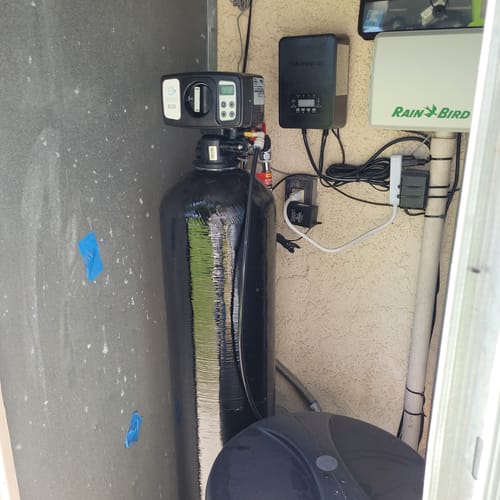
My journey toward the SoftPro Iron Master began with understanding why conventional iron filters struggle with high concentration levels like ours. Traditional systems rely on ion exchange resins that become quickly saturated in extreme conditions, requiring frequent regeneration and creating the pressure issues we were experiencing.
I spent weeks researching alternative approaches and discovered that air injection systems represent a completely different methodology. Instead of trying to capture iron directly, these systems oxidize ferrous iron (dissolved) into ferric iron (particulate), then filter out the resulting particles. This process, called catalytic oxidation, can handle much higher iron concentrations without the frequent regeneration cycles.
The key component I learned about was Katalox Light media – a specialized filtration material that combines oxidation and filtration in a single step. Unlike conventional resins, Katalox doesn't become saturated with iron; instead, it catalyzes the oxidation process while simultaneously filtering out the oxidized particles.
What convinced me about the SoftPro Iron Master specifically was its air injection design combined with Katalox media.
The system automatically injects air into the water stream, providing the oxygen necessary for iron oxidation. The Katalox media then captures the oxidized iron while maintaining high flow rates. This dual-action approach meant I could potentially replace my two-filter system with a single, more efficient unit.
I was particularly impressed by the system's capacity specifications. The Iron Master can handle up to 15 PPM of iron – just above our 14 PPM levels – while maintaining flow rates of 10 gallons per minute. Our previous setup struggled to maintain 6 GPM, so this represented a significant improvement in both capacity and performance.
The regeneration process also appealed to me. Instead of daily salt-based regeneration, the Iron Master uses simple backwashing every few days, consuming only water and requiring no chemicals. For our household water usage patterns, this meant regeneration approximately every 72 hours instead of every 36 hours.
After comparing specifications from multiple manufacturers, I appreciated SoftPro's transparency about system limitations and proper sizing calculations. Their technical documentation clearly stated that 14 PPM was near the upper limit of the system's capacity, which gave me confidence they weren't overselling the product's capabilities.
Unboxing and First Impressions
The SoftPro Iron Master arrived on a freight truck, carefully strapped to a pallet – a clear indication this was serious equipment rather than a consumer-grade appliance. The shipping container showed no damage, and the driver helped position it in my garage for inspection.
My first impression was the substantial build quality. The main tank measures 13 inches in diameter and stands 54 inches tall, constructed from heavy-duty fiberglass with a professional-grade finish. The weight – approximately 180 pounds when fully assembled – immediately suggested this was built for longevity rather than cost-cutting.
The control head caught my attention immediately. The Fleck 2510SXT valve is a commercial-grade component that I'd seen referenced in water treatment forums as extremely reliable. The digital display was clear and intuitive, showing current operating mode, time until next regeneration, and gallons processed.
Unpacking revealed every component I'd need for installation, plus several I hadn't expected.
Along with the obvious items – bypass valve, fittings, tubing – SoftPro included a water test kit, installation manual with actual photos (not just diagrams), and a pre-programmed control head. Most manufacturers ship with generic programming that requires adjustment; having the system pre-configured for iron filtration saved considerable setup time.
The Katalox Light media was already loaded in the tank, eliminating the messy process of media installation. I could see through the sight glass that the media filled approximately 60% of the tank volume, leaving space for the air injection and backwash processes to function properly.
Quality details impressed me throughout the inspection. Stainless steel fittings instead of brass, reinforced tubing connections, and a substantial bypass valve that felt like it would last decades. The installation hardware was clearly marked and organized, suggesting someone had actually thought about the installation experience.
One pleasant surprise was the compact footprint despite the system's capacity. Our previous dual-filter setup occupied nearly 8 feet of wall space; the Iron Master would require just 3 feet while delivering superior performance. This space savings would allow me to reconfigure our utility room for better access and maintenance.
Installation Experience and Setup

I decided to tackle the installation myself, having experience with our previous system and confidence in my basic plumbing skills. The SoftPro manual provided clear guidance, and I appreciated that it focused on practical installation rather than generic instructions.
Preparation required shutting off our main water supply and draining the existing system. I'd learned from previous installations to have all tools and materials ready beforehand: pipe cutters, torch for soldering, flux, fittings, and Teflon tape. The existing plumbing connections were 1-inch copper, which matched the Iron Master's specifications perfectly.
The most challenging aspect was positioning the unit properly. At 180 pounds, it required careful maneuvering into our utility room. I used a furniture dolly and took my time, ensuring the unit was level and properly positioned relative to the drain and electrical connections.
The bypass valve installation went smoothly, following the same configuration as our previous system.
I particularly appreciated that SoftPro included a full-flow bypass valve rather than the restricted versions some manufacturers provide. This meant we could completely bypass the system for maintenance while maintaining normal household water pressure.
Electrical connection was straightforward – a standard 120V outlet with the included transformer. The control head's power requirements are minimal, drawing less than 10 watts during operation and slightly more during regeneration cycles.
Programming the control head was surprisingly simple. The Fleck 2510SXT came pre-programmed for iron filtration, but I wanted to adjust the regeneration frequency based on our specific usage patterns. The manual provided clear instructions for modifying the gallons-per-regeneration setting based on household size and iron levels.
Initial startup required following a specific sequence to ensure proper air injection operation. This involved manually initiating a regeneration cycle, checking for proper air injection, and verifying that the system was drawing air through the dedicated air line. The entire process took about 30 minutes and proceeded exactly as the manual described.
First water flow revealed immediately noticeable improvements.
The pressure at our kitchen faucet measured 45 PSI – only 5 PSI less than our unfiltered municipal supply. Our previous system had reduced pressure to 28 PSI, making this a dramatic improvement in daily usability.
Performance Testing and Real-World Results
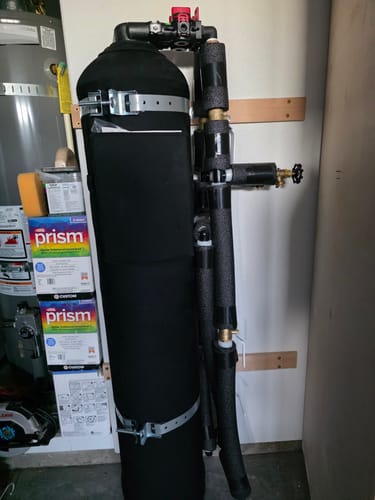
Testing the Iron Master's effectiveness required establishing baseline measurements and tracking improvements over time. I used both professional test kits and visual observations to document the system's performance with our challenging 14 PPM iron levels.
Pre-installation testing confirmed our iron content at 14.2 PPM using a Hach iron test kit – slightly above even my previous measurements. I also tested pH (7.8), total dissolved solids (385 PPM), and hardness (12 grains per gallon) to understand the complete water chemistry picture.
After 24 hours of operation, the first post-filtration test showed dramatic improvement.
Iron levels had dropped to 0.15 PPM – well below the EPA's aesthetic guidelines and a 99% reduction from incoming levels. The metallic taste that had plagued our water for years was completely gone, and the slight sulfur odor we'd barely noticed had also disappeared.
Visual improvements were immediately apparent throughout the house. The orange staining that typically appeared on our bathroom fixtures after a single day was absent after a week of Iron Master operation. Our white porcelain sink, which I'd scrubbed clean before installation, remained pristine – something that hadn't happened since we'd moved to this property.
Laundry results provided the most dramatic evidence of improvement. White clothing that had developed a persistent yellow tint was gradually returning to true white after several wash cycles with the filtered water. New white items remained bright and clean, finally allowing us to purchase light-colored clothing again.
Appliance performance improvements exceeded my expectations.
Our coffee maker, which had required weekly cleaning due to iron staining, now shows no mineral buildup after two weeks of operation. The dishwasher's interior, previously coated with a reddish film, is remaining clean and spotless.
Flow rate testing revealed the system's most impressive achievement. During peak usage – shower, dishwasher, and washing machine running simultaneously – pressure at individual fixtures remained strong and consistent. Our previous system would have reduced flow to unusable levels iron filter for well water under these conditions.
The regeneration process operates exactly as specified, occurring every 72-76 hours based on our family's water usage patterns. The automatic backwash cycle runs for approximately 12 minutes, consuming about 150 gallons of water – significantly less than our previous system's salt-based regeneration that used 300 gallons plus chemicals.
Daily Living Impact and Household Benefits
The transformation in our daily water experience has been remarkable, touching aspects of household life I hadn't even considered when researching iron filtration solutions. These real-world improvements demonstrate how eliminating iron contamination extends far beyond just removing stains and metallic taste.
Cooking and food preparation have improved dramatically.
Coffee and tea now taste clean and bright, without the metallic undertones that had become so familiar we'd stopped noticing them. Rice and pasta cook to better textures, and even ice cubes from our refrigerator maker are crystal clear instead of slightly cloudy.
My wife's skincare routine has benefited unexpectedly. She'd been dealing with occasional skin irritation that we'd attributed to Arizona's dry climate, but it's virtually disappeared since the Iron Master installation. Her dermatologist had mentioned that iron iron filter for well and other metals can exacerbate sensitive skin conditions – something we'd never connected to our water quality.
Bathroom cleaning has become almost effortless. Previously, maintaining white grout and fixtures required weekly scrubbing with specialized iron removal products. Now, normal bathroom cleaners are sufficient, and the orange staining that appeared within days of deep cleaning is completely absent.
Our houseguests have noticed the improvement without prompting.
My brother-in-law, who'd always brought bottled water during visits, complimented our tap water during his last stay. Our neighbor, who'd experienced similar iron issues before installing a different system, was impressed by our water pressure and asked detailed questions about the Iron Master's performance.
Appliance maintenance schedules have relaxed significantly. Our water heater, which had required annual flushing due to sediment buildup, is showing no signs of iron accumulation. The dishwasher rinse aid is lasting twice as long, and our washing machine's internal components remain clean and mineral-free.
The elimination of bottled water purchases represents an unexpected cost savings. We'd been buying 5-gallon jugs for drinking and cooking – approximately $40 monthly. While this wasn't the primary motivation for the Iron Master purchase, it's a welcome reduction in ongoing expenses.
Operating Costs and Maintenance Reality
Understanding the true cost of ownership extends beyond the initial purchase price, and I've been carefully tracking the Iron Master's operational expenses since installation. These real-world costs provide important context for anyone evaluating iron filtration investments.
Electricity consumption is minimal and barely noticeable on our utility bills. The control head draws approximately 8 watts during normal operation and peaks around 45 watts during regeneration cycles. Based on our local electricity rates and regeneration frequency, monthly electrical costs are under $3.
Water consumption during regeneration represents the primary ongoing operational cost.
Each backwash cycle uses approximately 150 gallons over 12 minutes, occurring every 72-76 hours based on our usage patterns. At Arizona's tiered water rates, this represents roughly $25 monthly – substantially less than our previous system's water and salt consumption of $65 monthly.
Maintenance requirements have proven remarkably light compared to our previous dual-filter setup. The Iron Master requires no chemical additions, salt deliveries, or filter cartridge replacements. The Katalox Light media is designed for 8-10 years of service, and the control head includes diagnostic capabilities that monitor system performance automatically.
I've established a simple monthly inspection routine: checking the bypass valve operation, verifying regeneration cycle timing, and testing a water sample for iron content. The system's diagnostic display shows gallons processed, regeneration frequency, and any error codes – providing early warning of potential issues.
The elimination of ongoing consumable costs represents significant long-term savings.
Our previous system required 40-pound salt bags bi-weekly ($15 each), specialized resin cleaner quarterly ($35), and annual professional service ($185). These expenses totaled over $1,000 annually, while the Iron Master's operational costs project to under $350 yearly.
Replacement parts availability and pricing appear reasonable based on SoftPro's published service information. The control head carries a 5-year warranty, the tank is warrantied for 10 years, and Katalox media replacement costs approximately $400 when eventually needed.
Insurance against appliance damage provides additional value that's difficult to quantify precisely. Our previous iron levels were shortening appliance life spans and requiring frequent repairs. The water heater manufacturer had actually voided our warranty due to iron-related damage – a costly lesson that influenced our decision to invest in more effective filtration.
Honest Assessment: Limitations and Considerations
Despite the overwhelmingly positive experience with the SoftPro Iron Master, honest evaluation requires acknowledging limitations and scenarios where this system might not be the optimal choice. These considerations help potential buyers make informed decisions based on their specific circumstances.
Space requirements are more substantial than some alternatives.
The 13-inch diameter tank and 54-inch height demand dedicated utility space that not all homes can accommodate. While more compact than our previous dual-filter setup, homeowners with extremely limited utility room space might need to consider smaller, less capable alternatives.
Initial investment represents a significant upfront cost that requires long-term ownership perspective to justify. At approximately $2,800 including installation materials, the Iron Master requires 3-4 years of operation to break even compared to ongoing maintenance costs of lesser systems. Homeowners planning to relocate within a few years might consider less expensive alternatives.
Iron levels approaching the system's 15 PPM maximum capacity might experience occasional breakthrough during peak usage periods. While our 14 PPM levels are handled consistently, I occasionally notice slight iron taste during heavy water usage days when multiple appliances operate simultaneously.
The air injection system creates subtle operational sounds that sensitive individuals might find noticeable.
The air pump operates quietly but produces a soft humming during regeneration cycles. Located in our detached utility room, this isn't problematic, but installation near living spaces might require consideration.
Well water with extreme pH levels (below 6.5 or above 8.5) might require pre-treatment for optimal Iron Master performance. Our pH of 7.8 falls within the acceptable range, but more extreme levels could affect the oxidation process efficiency.
Professional installation adds $500-800 to the total investment for homeowners without plumbing experience. While the system includes comprehensive instructions, the substantial weight and precise plumbing connections might overwhelm less experienced DIY installers.
Seasonal water chemistry variations could affect performance consistency.
Arizona's well water remains relatively stable year-round, but regions with seasonal iron level fluctuations might experience varying system performance. The Iron Master handles our consistent 14 PPM excellently but might struggle if levels regularly exceed 15 PPM during certain seasons.
The 8-10 year Katalox media lifespan, while excellent for this technology, represents an eventual $400 replacement cost that should factor into long-term ownership calculations. Traditional ion exchange systems might have lower media replacement costs but require much more frequent servicing.