
Hi, I'm Lori H.. I live in Arizona.
Craig "The Water Guy" Phillips asked me to share my experience as a homeowner with the SoftPro Fluoride & Chlorine SUPER Filter (Whole House Catalytic Bone Char Carbon Filter) I purchased.
This is how my adventures played out. I hope this helps you in your decision.
Living in Arizona, I thought I understood water problems. Our municipal supply has always carried that unmistakable chlorine smell, and honestly, I'd grown somewhat accustomed to it over the years. But when my teenage daughter started complaining about her hair feeling "crunchy" after showers and my morning coffee began tasting more like a swimming pool than the rich brew I craved, I knew something had to change.
The final straw came during a dinner party last spring. As I filled water glasses for our guests, one friend politely asked if we had any bottled water instead. The embarrassment hit me harder than I expected. Here I was, proudly serving a home-cooked meal, only to have our tap water become the conversation topic—and not in a good way.
The Reality of Arizona Municipal Water Challenges
Arizona's water treatment facilities work overtime to make our supply safe, but that comes with consequences most homeowners don't fully grasp. The chlorine levels here are often higher than many other states due to our intense heat and longer distribution distances. What starts as necessary disinfection becomes a daily assault on our senses and, frankly, our quality of life.
I started paying closer attention to our water's impact beyond just taste and smell. Our white clothes were developing a dingy gray tint despite using quality detergents. The glass shower doors required constant scrubbing to remove the film buildup. Even our houseplants seemed less vibrant, though I hadn't connected that to our water quality until I started researching.
The health implications began weighing on my mind too. Did you know that chlorinated water can strip natural oils from your skin and hair, leading to dryness and irritation?
My husband had been dealing with minor skin irritation for months, attributing it to Arizona's dry climate. I wondered if our water might be contributing to the problem.
Beyond personal comfort, I discovered that fluoride in municipal water, while beneficial for dental health in small amounts, becomes concerning when you're consuming it all day through cooking, beverages, and direct consumption. The cumulative exposure made me want more control over what my family SoftPro Fluoride Filtration was ingesting daily.
Research Journey: Understanding Filtration Technologies
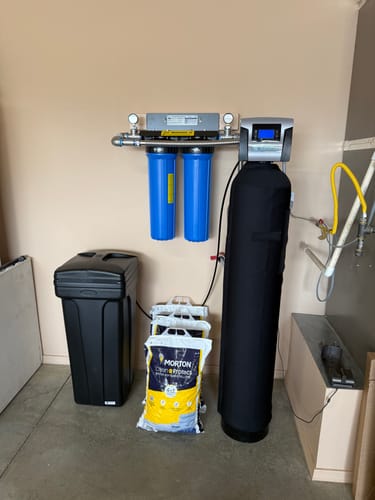
My investigation into whole house filtration systems revealed a confusing landscape of technologies, each claiming superiority. Basic sediment filters seemed inadequate for our chemical contamination issues. Reverse osmosis systems appeared too wasteful for Arizona's water-conscious environment, plus they'd require point-of-use installation rather than whole-house treatment.
Carbon filtration kept appearing in my research, but I learned there's a significant difference between standard activated carbon and the specialized media I eventually chose. Standard carbon excels at chlorine removal and improving taste, but it falls short on fluoride reduction—a priority for my family.
The breakthrough came when I discovered catalytic carbon technology. Unlike conventional carbon, catalytic carbon creates an actual chemical reaction that breaks down chlorine and chloramines at the molecular level. This process is more thorough and longer-lasting than simple absorption.
But the real game-changer was learning about bone char carbon. This specialized filtration medium has been used for centuries and demonstrates remarkable effectiveness at fluoride reduction—something standard carbon simply cannot achieve. The combination of catalytic carbon and bone char in a single system addressed both my chlorine and fluoride concerns.
I spent weeks comparing capacity ratings, flow rates, and maintenance requirements. The SoftPro system stood out because of its upflow design, which maximizes contact time between water and filtration media while preventing channeling—a common problem with downflow systems where water finds the path of least resistance.
Unboxing and Initial Assessment
The system arrived in packaging that immediately conveyed quality. Heavy-duty cardboard with protective foam inserts suggested this wasn't a cheaply made unit. The main tank itself was impressively substantial—a 13-inch diameter fiberglass vessel that felt solid and well-constructed.
Opening the components box revealed the electronic control head, bypass valve assembly, and installation hardware. The control head looked sophisticated compared to basic mechanical timers I'd seen on other systems. Digital programming and multiple cycle options suggested this was designed for optimization rather than simple scheduling.
The instruction manual exceeded my expectations. Clear diagrams, troubleshooting guides, and detailed specifications showed a manufacturer that understood homeowner installation challenges. They even included water testing recommendations for optimal programming—a detail that increased my confidence in the purchase.
One surprise was the weight of the filtration media. The catalytic carbon and bone char materials were denser than I'd anticipated, which made sense given their enhanced processing capabilities. The media came pre-measured for the tank size, eliminating guesswork during installation.
Installation Experience and Setup Process

I opted for professional installation despite being fairly handy with home projects. The plumbing modifications required confidence I didn't possess, particularly the main line integration and bypass valve setup. The installer arrived with specialized tools and completed the job in about four hours.
The most complex aspect was positioning the system near our main water entry point while maintaining adequate clearance for maintenance access. Arizona homes often have challenging utility spaces, and ours proved no exception. The installer had to relocate some existing piping to accommodate the tank size and ensure proper drainage for the backwash cycle.
The electrical connection was straightforward—a standard 120V outlet powered the control head. Programming involved setting our water hardness level, daily usage patterns, and regeneration schedule. The installer walked me through each setting, explaining how the system would adapt to our household's consumption patterns.
Initial startup included a complete backwash and rinse cycle to remove any dust or debris from the filtration media. This process took about 45 minutes and used approximately 200 gallons of water—something to consider if you're on a tight usage budget.
The first glass of filtered water was revelatory. The chlorine odor that had been our constant companion simply vanished. No chemical aftertaste, no swimming pool smell—just clean, neutral water that let me focus on flavor rather than fighting through treatment chemicals.
Comprehensive Performance Analysis After Eight Months
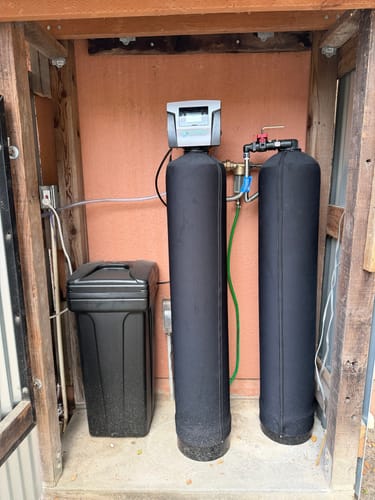
The transformation in our daily water experience has been remarkable across multiple areas of our household. Starting with the most obvious changes, our drinking water now tastes like what I remember from childhood visits to my grandparents' well water—clean, crisp, and refreshing without any chemical interference.
Coffee brewing has become a genuine pleasure again. The difference is so pronounced that I've started buying higher-quality beans because I can finally taste the subtle flavor notes that were previously masked by chlorine. My morning ritual went from tolerable necessity to something I actually anticipate.
The catalytic carbon's performance on chlorine and chloramine removal has been consistently excellent. I tested the water after three months using basic test strips and found virtually undetectable chlorine levels. Even more impressive, the system maintains this performance throughout the entire regeneration cycle, unlike some systems that show declining effectiveness toward the end of their cycle.
Fluoride reduction, courtesy of the bone char component, has been equally impressive. While I can't taste fluoride directly, independent testing showed a reduction from 1.2 ppm to 0.3 ppm—well within the range I was targeting for my family's health considerations.
The upflow design's efficiency has proven itself through consistent water pressure throughout our home. Even during peak usage times—simultaneous showers, dishwasher operation, and laundry—I haven't noticed any pressure drops or flow restrictions. The 1.5 cubic foot capacity handles our family of four's demands without strain.
Regeneration cycles occur every 8-10 days depending on our usage patterns. The system's computer tracks actual water consumption rather than running on a simple timer, which maximizes filter life and minimizes waste. Each regeneration uses about 150-200 gallons and takes roughly 90 minutes, typically scheduled for 2 AM to avoid disruption.
Daily Life Improvements and Unexpected Benefits
The most immediate family feedback came from shower experiences. My daughter's hair complaints disappeared within a week, replaced by comments about how much softer and more manageable her hair felt. My own skin, which I'd attributed to Arizona's dry climate, became noticeably less irritated and required less moisturizing.
Laundry results surprised me with their dramatic improvement. White clothes started looking actually white again instead of the grayish tint we'd accepted as normal. Colored fabrics appeared more vibrant, and clothing felt softer even without fabric softeners. I realized we'd been compensating for water quality issues without recognizing the source of the problem.
Kitchen cleanup became significantly easier as soap and detergents worked more effectively in the filtered water. Dishes emerged from the dishwasher without spots or film, and hand washing required less soap to achieve better results. Even our stainless steel sink maintains its shine longer between cleanings.
An unexpected benefit appeared in our houseplants and small herb garden. Plants that had been struggling began showing improved growth and more vibrant color. Removing chlorine and fluoride apparently made a bigger difference than I'd anticipated for plant health.
Guests have commented on the water quality without prompting, which feels gratifying after that embarrassing dinner party that started this journey. Several friends have asked for system details after tasting our water, which serves as ongoing validation of the investment's value.
The peace of mind factor shouldn't be underestimated either. Knowing that my family is consuming cleaner water for drinking, cooking, and bathing has eliminated a low-level anxiety I didn't realize I carried about our municipal water supply.
Operational Costs and Long-Term Value Assessment
The financial aspect of whole house filtration requires honest evaluation beyond the initial purchase price. After eight months of operation, I can provide realistic cost projections based on actual usage rather than manufacturer estimates.
The filtration media—catalytic carbon and bone char—requires replacement every 3-5 years depending on water quality and usage volume. Based on our consumption patterns and Arizona's water conditions, I'm projecting replacement at the four-year mark, costing approximately $300 for both media types.
Electricity consumption is minimal, adding roughly $3-4 per month to our utility bill. The control head operates efficiently, and regeneration cycles don't consume significant power. This cost is barely noticeable in our overall household budget.
Water usage for regeneration averages 1,200-1,500 gallons monthly, which costs approximately $8-10 based on our municipal rates. While this seems substantial, it's less than we previously spent on bottled water for cooking and drinking, creating a net savings.
The most significant savings come from reduced cleaning product usage, longer appliance life, and fewer personal care products needed for skin and hair. Our soap, shampoo, and detergent consumption has dropped noticeably because they work more effectively in treated water.
Calculating return on investment, the system pays for itself within 2.5-3 years when considering bottled water elimination, reduced product usage, and appliance protection. Beyond that timeframe, it's generating actual savings while providing superior quality.
Maintenance costs have been minimal. The system includes self-diagnostic features that alert to any operational issues, and the bypass valve allows for easy servicing without shutting off household water supply.
Honest Assessment: Limitations and Considerations
No filtration system is perfect, and this one has characteristics that potential buyers should understand clearly. The most obvious consideration is space requirements—the tank and control head need adequate clearance for maintenance access, which can challenge homes with cramped utility areas.
Initial water waste during installation and regeneration cycles may concern environmentally conscious users. While the system is efficient compared to reverse osmosis, it does use water for cleaning the filtration media. In Arizona's drought-conscious environment, this requires philosophical acceptance of the trade-off between water usage and water quality.
The regeneration process creates some noise—not excessive, but noticeable if the system is located near living spaces. Scheduling regeneration for overnight hours mitigates this issue, but it's worth considering during installation planning.
Bone char filtration, while highly effective for fluoride removal, may concern some users due to its animal-derived nature. The material is thoroughly processed and poses no health risks, but vegetarians or vegans might prefer alternative fluoride removal technologies.
System programming requires some learning and adjustment to optimize performance for specific water conditions and usage patterns. While not complicated, it's more involved than simple set-and-forget systems some homeowners prefer.
The upfront investment is substantial compared to point-of-use filters or basic whole house systems. Households on tight budgets need to carefully consider whether the comprehensive benefits justify the initial cost versus more basic alternatives.
During power outages, the system defaults to bypass mode, providing unfiltered water until electricity returns. While this ensures continued water supply, it temporarily eliminates the filtration benefits we've grown accustomed to enjoying.
Final Verdict and Recommendation
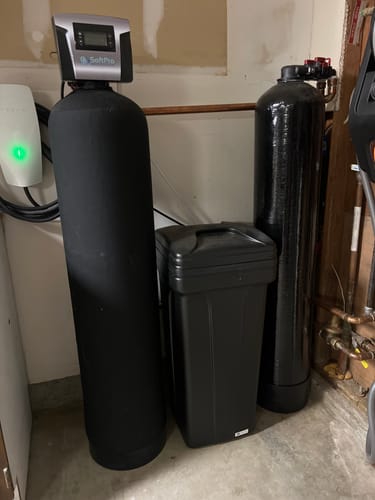
After eight months of daily use, this system has exceeded my expectations for comprehensive water treatment. The combination of catalytic carbon and bone char technologies addresses the specific challenges of Arizona municipal water more effectively than any single-media system could achieve.
The investment has proven worthwhile through tangible improvements in drinking water quality, household cleaning effectiveness, and personal care results. My family's daily quality of life has improved in ways I hadn't fully anticipated when making the purchase decision.
For households dealing with heavily chlorinated municipal water, fluoride reduction concerns, or multiple water quality issues, this represents an excellent comprehensive solution. The upflow design ensures efficient media utilization, while the intelligent control head optimizes performance and minimizes waste.
I would confidently recommend this system to friends facing similar water quality challenges, particularly those wanting whole-house treatment rather than multiple point-of-use solutions. The peace of mind and daily convenience justify the investment for families prioritizing water quality.
The system is ideal for households with 2-6 people, adequate utility space, and willingness to invest in long-term water quality improvement. Those seeking basic chlorine removal only might find simpler alternatives sufficient, but for comprehensive treatment, this combination of technologies delivers exceptional results.
Looking back, I wish I'd made this investment sooner. The cumulative benefits to health, household maintenance, and daily pleasure have made this one of our home's most valuable improvements. That embarrassing dinner party moment led to a decision that continues benefiting my family every single day.