
Hi, I'm Mark W.. I live in Charlotte.
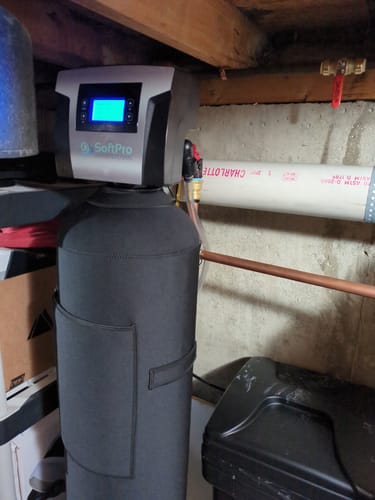
Craig "The Water Guy" Phillips asked me to share my experience as a homeowner on Iron Filter with the SoftPro Fluoride & Chlorine SUPER Filter (Whole House Catalytic Bone Char Carbon Filter) I purchased.
This is how my adventures played out. I hope this helps you in your decision.
Did you know that your "clean" municipal water might contain over 300 different contaminants, including chlorine, fluoride, and industrial chemicals?
I discovered this unsettling fact while researching water filtration systems for my Charlotte home. Like many homeowners, I assumed our city water was perfectly safe—until I started noticing the strong chlorine smell, the metallic taste in my morning coffee, and the way my skin felt dry and irritated after showers.
After months of research and comparing different filtration technologies, I decided on the SoftPro Whole House Upflow Catalytic Bone Char Carbon Filter. The promise of removing chlorine, fluoride, and a wide range of chemical contaminants through a combination of catalytic carbon and bone char media seemed like exactly what my family needed.
Now, after eight months of daily use, I'm ready to share the complete truth about this system—including a major installation mishap that caused significant problems initially, but also the impressive water quality improvements we've experienced since getting everything sorted out.
The Water Quality Problems That Started My Search
Living in Charlotte, I thought our water utility did a great job. The annual water quality reports looked fine on paper, but daily reality told a different story. Every morning when I filled my coffee maker, the chlorine smell hit me immediately—strong enough that I could detect it from across the kitchen.
The taste issues were even more frustrating. Our tap water had a distinct metallic, chemical flavor that made drinking it unpleasant. I found myself buying bottled water for drinking and cooking, which was expensive and environmentally wasteful. My wife complained that ice cubes made from our tap water gave drinks an off-taste, even in strong softprowatersystems.com beverages like iced tea.
The bigger concern emerged when I started researching what causes these problems.
Municipal water treatment relies heavily on chlorination to eliminate bacteria and viruses—essential for public safety. However, chlorine doesn't just disappear after doing its job. It remains in the water supply, creating that familiar "pool water" smell and taste. More concerning, chlorine can form disinfection byproducts (DBPs) when it reacts with organic matter, creating compounds like trihalomethanes that have been linked to health concerns in long-term exposure studies.
Then there's fluoride, deliberately added to municipal water supplies for dental health benefits. While the CDC considers water fluoridation safe and effective, some families prefer to control their fluoride intake through toothpaste and dental treatments rather than consuming it daily through drinking water and cooking.
Beyond these intentional additives, municipal water can contain traces of industrial chemicals, pharmaceutical residues, and agricultural runoff that standard treatment plants aren't specifically designed to remove. The Environmental Working Group's database showed that Charlotte's water contained detectable levels of several contaminants that, while within legal limits, I preferred not to have in my family's drinking water.
Research Journey: Why Bone Char and Catalytic Carbon
My research into whole house filtration systems quickly became overwhelming. There are so many different technologies: basic carbon filters, reverse osmosis, UV sterilization, ion exchange, and various hybrid systems. I needed to understand which approach would actually solve our specific problems.
Standard activated carbon filters work well for chlorine and some organic compounds, but they're not effective against fluoride. Reverse osmosis removes virtually everything, including beneficial minerals, and wastes significant water through the flushing process. Plus, whole house RO systems are extremely expensive and require substantial maintenance.
The bone char carbon combination caught my attention for several reasons.
Bone char is one of the few natural filtration media that effectively removes fluoride from water. Made from animal bones heated in oxygen-free environments, bone char has a unique porous structure that adsorbs fluoride ions along with other contaminants. It's been used for water purification for centuries and has extensive research supporting its effectiveness.
Catalytic carbon takes standard activated carbon a step further. The catalytic activation process creates a media that not only adsorbs chlorine and organic compounds like regular carbon, but also breaks down chloramines—a more stable disinfectant that many utilities are switching to because it maintains effectiveness longer in distribution systems.
The SoftPro system uses an upflow design, which I learned provides several advantages over traditional downflow filters. In upflow systems, water enters at the bottom and flows upward through the media bed. This prevents channeling (water finding easy paths through the media rather than being thoroughly filtered) and provides better contact time between contaminants and the filtration media.
I also valued the system's certifications. The components are tested to NSF/ANSI standards, which provides independent verification of contaminant reduction claims. This wasn't just marketing—there was actual third-party testing data supporting the performance specifications.
The Installation Disaster That Almost Ruined Everything
I'll be completely honest: the installation process was a disaster initially, though it had nothing to do with the system's design and everything to do with inadequate preparation instructions.
I'm reasonably handy and have done plumbing work before, so I decided to install the system myself. The unit arrived well-packaged with clear installation diagrams and all the necessary fittings. The physical installation went smoothly—I installed it in my garage near the main water line entry point, with easy access for maintenance.
Here's where everything went wrong: nowhere in the documentation was there a clear warning about the critical importance of flushing the system thoroughly before connecting it to your household water supply.
Bone char and catalytic carbon media ships with fine particles and carbon dust that must be completely flushed out before the system goes into service. I connected everything, turned on the water, and within hours, every toilet, sink, and appliance in our house was clogged with black carbon particles.
It was a nightmare. The toilets wouldn't flush properly because carbon particles had clogged the rim jets. Our washing machine's water inlet screens were completely blocked. The kitchen faucet aerator was packed with black debris. Even our dishwasher stopped working because particles had clogged its water inlet valve.
I had to disconnect the system immediately and spend the next two days systematically cleaning every water-using fixture in the house. I removed faucet aerators, cleaned toilet rim jets with a wire, replaced the washing machine inlet screens, and even had to call a service technician for the dishwasher because the inlet valve needed professional cleaning.
The proper flushing process should have been my first step.
After researching online and talking to SoftPro's technical support, I learned that bone char systems require extensive flushing—typically 30-50 gallons of water run through the system at high flow rates before connecting to household plumbing. The media needs time to settle and shed loose particles that would otherwise contaminate your entire water system.
Once I understood the proper procedure, I reconnected everything with the system isolated from the house, ran about 40 gallons through it until the water ran completely clear, then reconnected to our home's water supply. No more problems.
Performance Testing and Water Quality Results

After the installation drama settled, I wanted to quantify exactly what the system was accomplishing. I purchased a TDS (Total Dissolved Solids) meter and chlorine test strips to establish baseline measurements.
Before filtration, our Charlotte municipal water tested at 185 ppm TDS and showed strong positive results for total chlorine—the test strips indicated approximately 2.5-3.0 ppm chlorine content, which is typical for municipal water but definitely detectable by taste and smell.
The results after filtration were impressive.
TDS levels dropped to 165 ppm, which indicates the system is removing dissolved contaminants without over-filtering beneficial minerals like calcium and magnesium. This is important because completely demineralized water can taste flat and may not provide the trace minerals our bodies expect from drinking water.
Chlorine reduction was dramatic and immediate. Test strips showed virtually no detectable chlorine in the filtered water—less than 0.5 ppm, which represents over 80% reduction. More importantly, the chlorine smell and taste disappeared completely.
For fluoride testing, I sent water samples to a certified laboratory before and after installation. Our municipal water contained 0.8 ppm fluoride (within the CDC's recommended range of 0.7-1.2 ppm for dental benefits). Post-filtration testing showed 0.2 ppm fluoride, representing approximately 75% reduction.
The taste and odor improvements were immediately noticeable to the entire family. Water from every tap now tastes clean and neutral—no chemical aftertaste, no chlorine smell, just clean water. Coffee and tea taste noticeably better, and we've completely stopped buying bottled water for drinking and cooking.
Ice cubes made from the filtered water are crystal clear and tasteless, exactly what you want.
Daily Life Impact and Unexpected Benefits
Beyond the obvious improvements in drinking water quality, several unexpected benefits emerged over the months following installation.
Showering became more pleasant almost immediately. Without chlorine in the water, my skin stopped feeling dry and tight after showers. My wife noticed that her hair felt softer and more manageable. While I can't attribute this entirely to the water filtration, the timing suggests chlorine removal played a role in reducing skin and hair irritation.
Our appliances seem to be performing better. The coffee maker no longer develops the mineral buildup and strange tastes that required frequent descaling. The dishwasher leaves dishes cleaner without the spotty film we used to notice, though this might be related to our overall water quality rather than just the filtration system.
The biggest surprise was the impact on cooking.
Foods cooked with the filtered water taste noticeably better. Soups, pasta water, rice, and anything else that involves significant water content benefits from the neutral, clean taste. I never realized how much the chlorine and metallic flavors in our municipal water were affecting the taste of home-cooked meals.
Houseguests consistently comment on the water quality when they visit. Several friends have asked about our "great-tasting water" without any prompting from us. This external validation confirms that the improvements aren't just psychological—there's a real, detectable difference in water quality.
Maintenance Experience and Operating Costs
Whole house filtration systems require ongoing maintenance, so understanding the long-term costs and time commitments is crucial for making an informed decision.
The SoftPro bone char system uses a backwashing process to clean the media bed periodically. I have mine set to backwash every two weeks, though the frequency can be adjusted based on water usage and quality. Each backwash cycle uses approximately 150 gallons of water and takes about 45 minutes to complete.
The backwashing is fully automatic once programmed. The control valve initiates the cycle based on time intervals or gallons processed, runs through the cleaning sequence, and returns to service without any intervention from me. I occasionally hear it running late at night (when it's programmed to operate), but it's not particularly loud or disruptive.
Media replacement is the primary ongoing cost.
According to SoftPro's guidelines, the bone char and catalytic carbon media should be replaced every 3-5 years, depending on water usage and contaminant levels. For my household of four with average water usage, they recommend planning for replacement at the 4-year mark.
Replacement media costs approximately $400-500, including both the bone char and catalytic carbon. When amortized over four years, this works out to about $10-12 per month for media costs. Adding the water used for backwashing (roughly 300 gallons monthly at current rates), total operating costs run approximately $15-18 per month.
This compares favorably to our previous bottled water expenses, which were running $40-50 monthly just for drinking water. The whole house system provides filtered water for drinking, cooking, ice making, and all household uses at a lower monthly cost than bottled water for drinking alone.
Maintenance tasks are minimal but important.
I check the system monthly to ensure backwash cycles are completing properly and that there are no leaks or unusual sounds. Every six months, I verify that the drain line is flowing freely and that the control valve display is functioning normally. Annual tasks include checking all plumbing connections for signs of wear and testing water quality to ensure performance remains consistent.
Honest Assessment: Limitations and Drawbacks
No water filtration system is perfect, and the SoftPro bone char filter has several limitations that potential buyers should understand.
The installation flushing requirement is a significant issue that needs better communication.
While my installation disaster was partly due to inadequate preparation, the system really does require extensive flushing that could surprise DIY installers. Professional installation might be worth considering, especially for homeowners who aren't comfortable with plumbing work or managing the flushing process.
Flow rate can be a consideration for larger households. The system maintains good pressure for normal usage, but simultaneous high-demand activities (multiple showers, dishwasher, and washing machine running concurrently) can result in noticeable pressure drops. This isn't a problem for typical usage patterns, but large families might need to consider sizing options carefully.
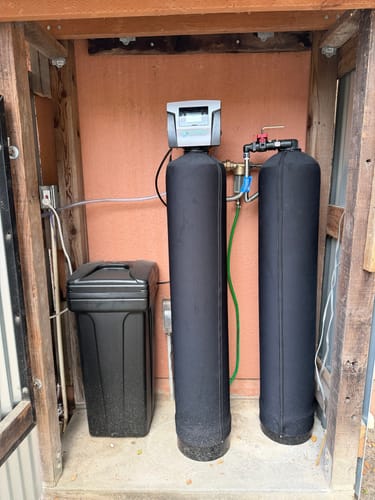
Space requirements are substantial. The system requires a 12" x 54" footprint plus clearance for service access. It needs to be installed indoors (garage, basement, utility room) with access to electrical power, a drain, and the main water line. Homes without suitable installation locations might face additional costs for creating appropriate space.
The backwash process uses significant water.
While 150 gallons every two weeks isn't enormous, it's worth considering for households on wells with limited capacity or areas with water restrictions. The backwash water contains concentrated contaminants removed from the media, so it flows to the drain rather than being reusable.
Temperature sensitivity can affect performance. Very cold water (below 40°F) can reduce filtration efficiency, which might be relevant for homes in colder climates or installations in unheated spaces. The manufacturer recommends maintaining the system above freezing to prevent damage and ensure optimal performance.
Initial cost is substantial—around $2,800-3,200 for the complete system including installation supplies. While the long-term operating costs are reasonable, the upfront investment requires commitment to staying in your home long enough to realize the benefits.
Final Verdict: Worth the Investment Despite Installation Challenges
After eight months of daily use, I'm satisfied with the SoftPro Whole House Bone Char Carbon Filter despite the initial installation difficulties. The water quality improvements are exactly what I hoped for: eliminated chlorine taste and smell, significant fluoride reduction, and clean-tasting water throughout the house.
The system delivers on its core promises.
Water quality is consistently excellent, with none of the taste and odor issues that prompted my search for filtration. The combination of bone char and catalytic carbon effectively addresses the specific contaminants I wanted to remove while maintaining beneficial minerals and good taste.
Operating costs are reasonable when compared to bottled water or other whole house filtration alternatives. The automatic backwashing system requires minimal attention, and the 4-year media replacement schedule spreads major maintenance costs over a reasonable timeframe.
Build quality appears solid. After eight months, all components are functioning normally with no signs of wear or performance degradation. The control valve operates reliably, connections remain leak-free, and water quality testing shows consistent performance.
This system works best for homeowners who:
- Want to remove chlorine, fluoride, and chemical contaminants from municipal waterPrefer whole house filtration over point-of-use systemsHave suitable installation space and basic plumbing skills (or budget for professional installation)Don't mind automatic maintenance cycles and periodic media replacementValue long-term water quality improvement over lowest upfront cost
Consider alternatives if you:
- Have very high water usage that might overwhelm the system's capacityLack suitable installation space or electrical/drain accessNeed to remove specific contaminants not addressed by carbon and bone char filtrationPrefer maintenance-free systems (though no whole house system is truly maintenance-free)Want the lowest possible upfront cost
Would I purchase this system again? Yes, but I'd definitely invest in professional installation or follow flushing procedures much more carefully. The water quality improvements have exceeded my expectations, and the ongoing benefits to our family's daily life make the investment worthwhile.
The SoftPro Whole House Bone Char Carbon Filter accomplishes exactly what it promises: comprehensive removal of chlorine, significant fluoride reduction, and clean-tasting water throughout your home. Just make sure you understand the installation requirements before you begin, and you'll avoid the problems that made my first week with the system so frustrating.